Prophecy
Zedekiah “will die in peace”, mourned like his fathers: the announcement set against his end in prison (Jeremiah 34:4-5)
⊘ Not fulfilled as written
Written 588 BC according to tradition; 588–550 BC according to historians. Event: 587–586 BC.
See the full entry: sources, objections, answersIn short
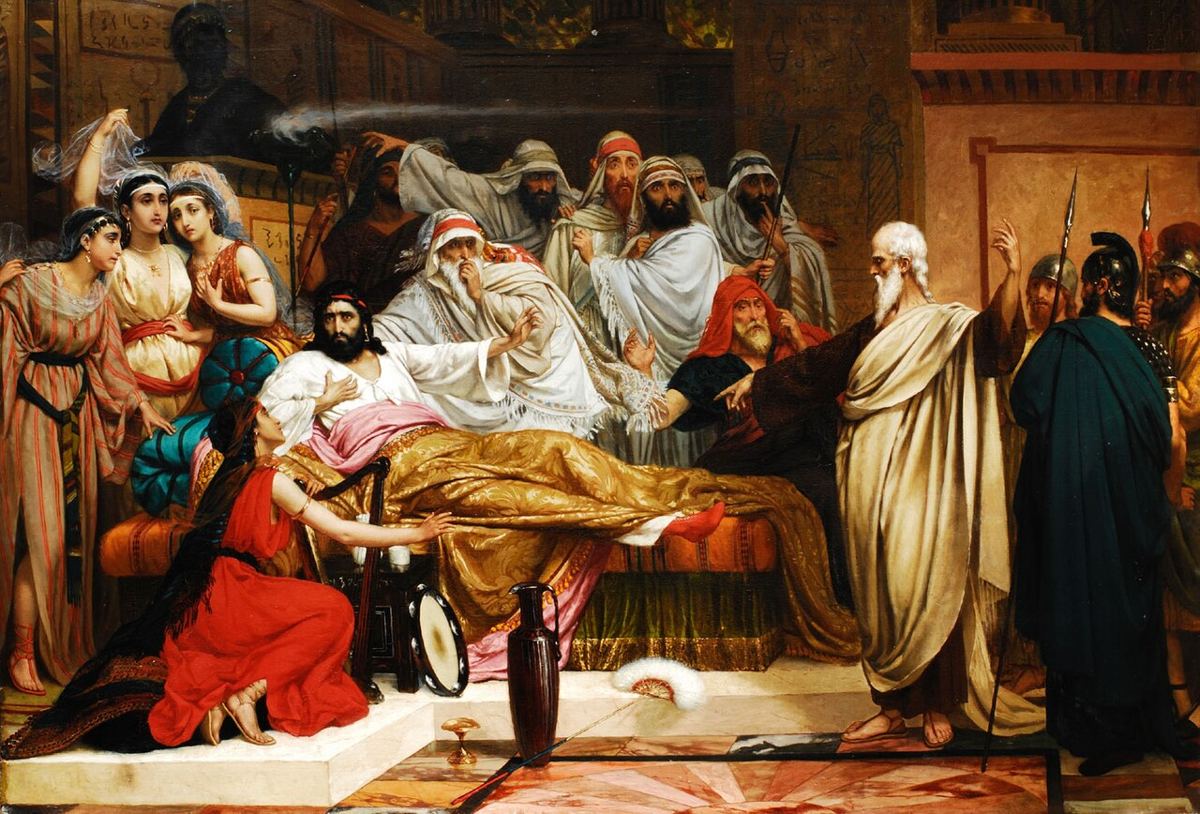
The announcement. The prophet Jeremiah, in the book of Jeremiah, around 588 BC, during the siege of Jerusalem, announces to Zedekiah, king of Judah, that he will not die by the sword but “in peace”, and that he will be mourned with the honors due to kings.
What happened. In 587 or 586 BC, according to the Bible, Zedekiah is captured, sees his sons killed, has his eyes put out and remains in prison in Babylon until his death. The Jewish historian Josephus adds that he was given a magnificent burial. Only the Bible and Josephus tell of this end.
What is still debated. believers understand “in peace” as a natural death, without the sword, or as a promise tied to a surrender that did not take place, while skeptics judge that an end in prison, blind, after the death of his sons, is not a death in peace.
What is surprising
The chapter of Jeremiah keeps side by side the part of the oracle that proved true, Zedekiah handed over to the king of Babylon, and the part that raises a problem, his “death in peace”. Jewish tradition did not hide the difficulty: the Talmud itself sets the two verses against each other and debates them openly.
Main objection (in French for now)
Un roi dont on égorge les fils sous ses yeux, qu’on aveugle et qui meurt en prison ne « meurt pas en paix » au sens ordinaire ; l’oracle a été conservé tel quel par les éditeurs du livre.
The text (World English Bible)
“Yet hear the LORD’s word, O Zedekiah king of Judah. The LORD says concerning you, ‘You won’t die by the sword. You will die in peace; and with the burnings of your fathers, the former kings who were before you, so they will make a burning for you. They will lament you, saying, “Ah Lord!” for I have spoken the word,’ says the LORD.”
Jer 34:4-5
Sources
- Josèphe, Antiquités juives 10.138-142 (trad. W. Whiston) — Lexundria
- Josèphe, Antiquités juives 10.154 (trad. W. Whiston) — Lexundria
- ABC 5 (Chronique de Jérusalem), BM 21946 — Livius.org, d’après A. K. Grayson
- Talmud de Babylone, Moed Katan 28b (édition William Davidson) — Sefaria
- Rashi sur Jérémie 34:5 — Sefaria (trad. A. J. Rosenberg, Judaica Press)
- Radaq sur Jérémie 34:5 — Sefaria
- Matthew Henry, Commentary on the Whole Bible, Jérémie 34 — Christian Classics Ethereal Library