Prophecy
“Zion will be plowed like a field”: the threat suspended in Hezekiah’s time (Micah 3:12; Jeremiah 26:18-19)
⊘ Not fulfilled as written
Written c. 725–701 BC according to tradition; c. 725–701 BC according to historians. Event: 701 BC.
See the full entry: sources, objections, answersIn short
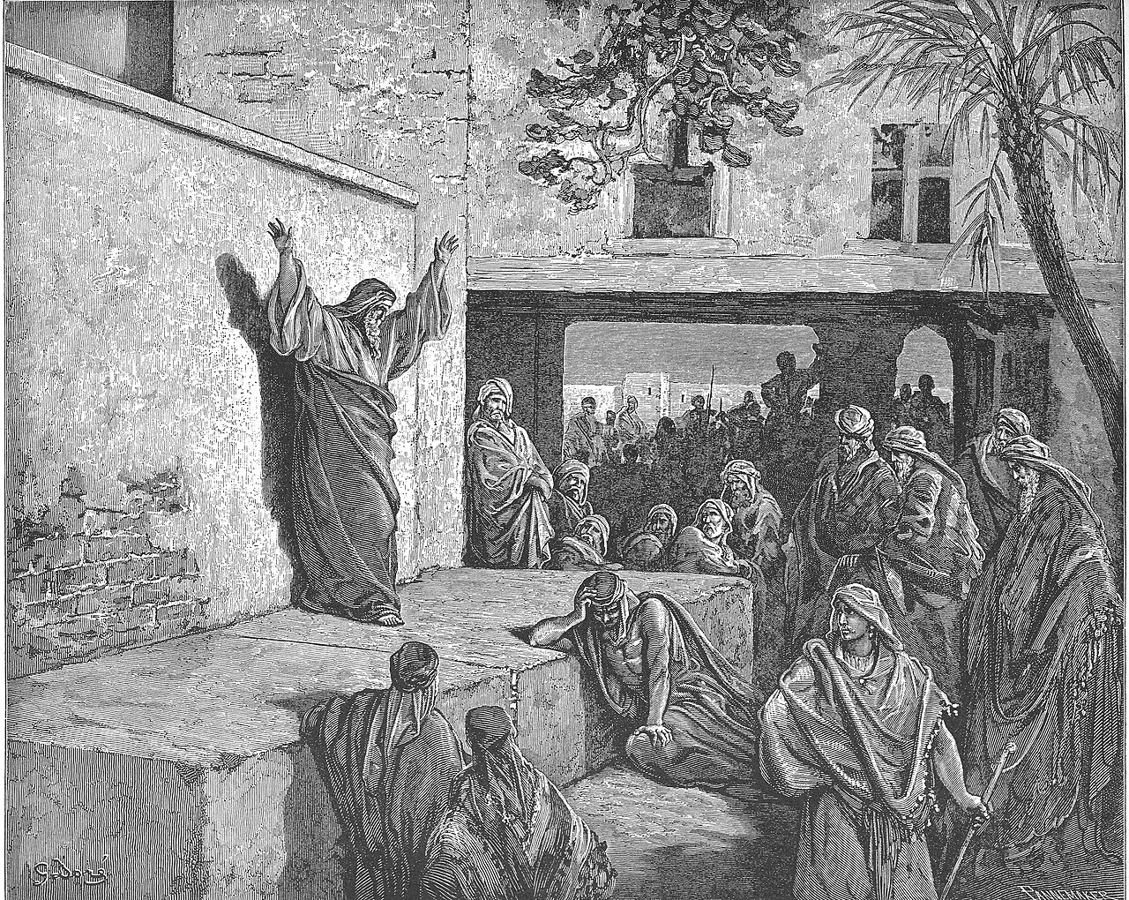
The announcement. The prophet Micah, in the book of Micah, at the end of the 8th century BC, under King Hezekiah, announces that Jerusalem will become a heap of stones and that the Temple hill will be plowed like a field.
What happened. It did not happen at the time: in 701 BC, the king of Assyria shuts Hezekiah up in Jerusalem without taking the city. A century later, the book of Jeremiah acknowledges this and explains that God had relented from punishing because Hezekiah had pleaded with him. Jerusalem is burned by the Babylonians in 587 or 586 BC.
What is still debated. for believers the punishment was postponed and then took place in 586 BC or in 70; for skeptics a threat with no date that is later applied to another catastrophe can never be disproved.
What is surprising
The Bible itself records that a prophetic threat was not fulfilled: since Hezekiah had pleaded with God, “the LORD relented”. Far from hiding this gap, the elders make it a precedent. The Assyrian annals confirm that Jerusalem was not taken in 701.
Main objection (in French for now)
L’oracle est formulé sans condition (Mi 3:12) : la lecture « conditionnelle » est une explication de Jr 26, un siècle plus tard, devant un oracle qui ne s’était pas réalisé.
The text (World English Bible)
Therefore Zion for your sake will be plowed like a field, and Jerusalem will become heaps of rubble, and the mountain of the temple like the high places of a forest.
Mic 3:12
“Micah the Morashtite prophesied in the days of Hezekiah king of Judah; and he spoke to all the people of Judah, saying, ‘The LORD of Armies says: “‘Zion will be plowed as a field, and Jerusalem will become heaps, and the mountain of the house as the high places of a forest.’ Did Hezekiah king of Judah and all Judah put him to death? Didn’t he fear the LORD, and entreat the favor of the LORD, and the LORD relented of the disaster which he had pronounced against them? We would commit great evil against our own souls that way!”
Jer 26:18-19
Sources
- Micah, Book of (I. Singer, M. Seligsohn) — Jewish Encyclopedia
- The Sennacherib Prism (campagne de 701) — Internet Ancient History Sourcebook, Fordham University
- Destruction by fire: reconstructing the evidence of the 586 BCE Babylonian destruction (Shalom et al.) — Bar-Ilan University, Journal of Archaeological Science
- Jean Calvin, Commentaire sur Jérémie et les Lamentations, vol. 3 (Jr 26:19) — Christian Classics Ethereal Library
- Jean Calvin, Commentaire sur Michée — Christian Classics Ethereal Library
- Talmud de Babylone, Makkot 24b (édition William Davidson) — Sefaria