Prophecy
The siege and extreme famine: “you will eat the flesh of your sons” (Deuteronomy 28:49-57)
● Written before, according to historians
Written c. 1406 BC according to tradition; c. 640–540 BC according to historians. Event: 587 BC – 70 AD.
See the full entry: sources, objections, answersIn short
The announcement. In the book of Deuteronomy, attributed to Moses around 1400 BC by tradition and dated by historians to around 622 BC with additions in the 6th century, God threatens Israel with a distant nation that will besiege it until the inhabitants eat their own children.
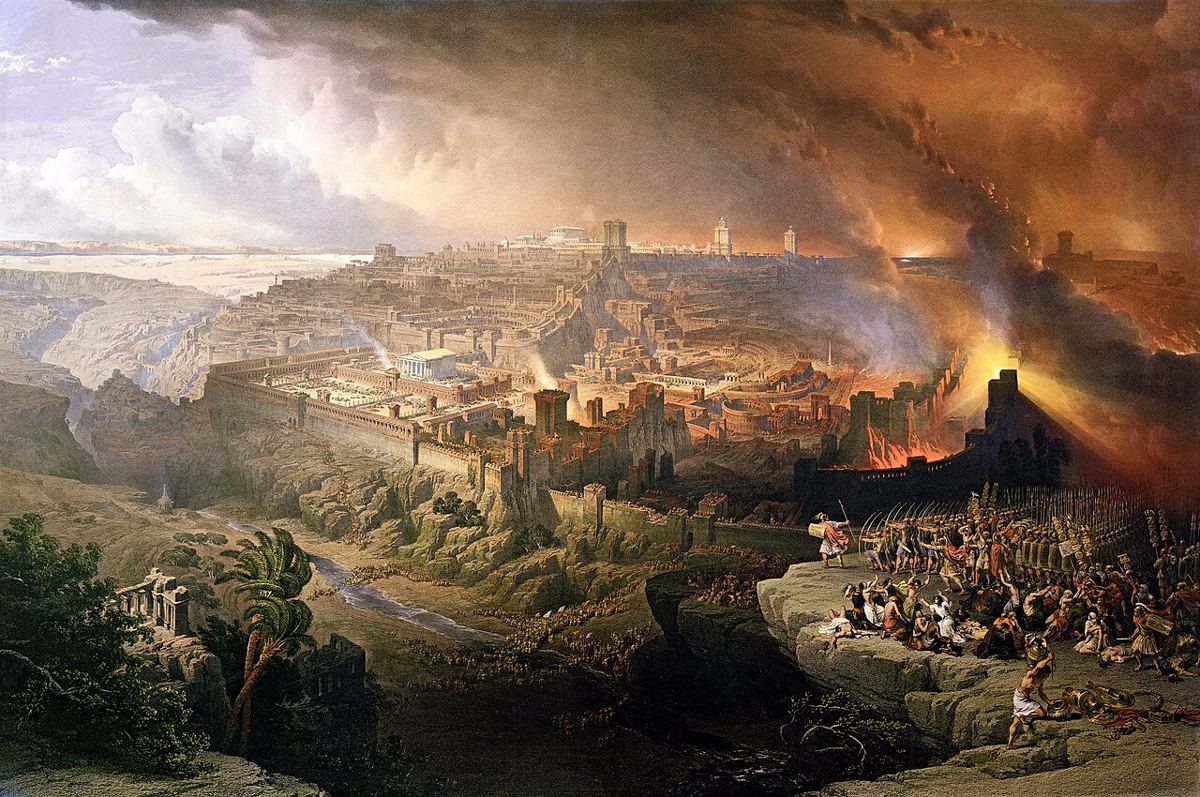
What happened. In 587-586 BC, during the siege of Jerusalem by Babylon, the book of Lamentations reports that mothers cooked their children. In AD 70, during the Roman siege, the historian Josephus tells how a wealthy woman killed, roasted and partly ate her infant, then hid the rest, as the text describes.
What is still debated. this curse takes up a formula known from the treaties of the time, and cannibalism was a frequent tragic outcome of long sieges, so nothing ties it to one siege in particular.
Why it is striking
Historians date this text to the 6th century BC at the latest, well before 70, and Josephus was not writing to defend a prophecy. But such horrors recurred in the long sieges of Antiquity, and an Assyrian treaty already threatened its vassals with them.
Main objection (in French for now)
La malédiction appartient à un genre connu : le traité de succession d’Assarhaddon (672 av. J.-C.) menace déjà le vassal parjure de « manger dans sa faim la chair de ses frères, de ses fils et de ses filles ». Dt 28 reprend une formule de malédiction de traité ; il ne décrit pas un événement unique.
The text (World English Bible)
The LORD will bring a nation against you from far away, from the end of the earth, as the eagle flies: a nation whose language you will not understand, a nation of fierce facial expressions, that doesn’t respect the elderly, nor show favor to the young. They will eat the fruit of your livestock and the fruit of your ground, until you are destroyed. They also won’t leave you grain, new wine, oil, the increase of your livestock, or the young of your flock, until they have caused you to perish. They will besiege you in all your gates until your high and fortified walls in which you trusted come down throughout all your land. They will besiege you in all your gates throughout all your land wh…
Deut 28:49-52
You will eat the fruit of your own body, the flesh of your sons and of your daughters, whom the LORD your God has given you, in the siege and in the distress with which your enemies will distress you. The man who is tender among you, and very delicate, his eye will be evil toward his brother, toward the wife whom he loves, and toward the remnant of his children whom he has remaining, so that he will not give to any of them of the flesh of his children whom he will eat, because he has nothing left to him, in the siege and in the distress with which your enemy will distress you in all your gates. The tender and delicate woman among you, who would not venture to set the sole of her foot on t…
Deut 28:53-57
Sources
- Flavius Josèphe, Guerre des Juifs 6.3.4 (trad. W. Whiston) — Perseus Digital Library, Tufts University
- Flavius Josèphe, Guerre des Juifs 6.9.3 (trad. W. Whiston) — Perseus Digital Library, Tufts University
- Damned if You Don’t (encadré de « Solomon’s Temple in Context ») — Biblical Archaeology Society Library
- Enforcing YHWH’s Covenant with Blessings and Curses, Imperial Style (Gad Barnea) — TheTorah.com
- Deuteronomy — Encyclopaedia Britannica
- Nahmanide (Ramban), commentaire sur Lévitique 26:16, trad. C. B. Chavel — Sefaria
- Commentaires classiques sur Deutéronome 28:53 (Ellicott, Barnes, Gill, Jamieson-Fausset-Brown et al.) — Bible Hub (textes du domaine public)
- Commentaires classiques sur Deutéronome 28:49 (Ellicott, Benson, Barnes, JFB, Poole et al.) — Bible Hub (textes du domaine public)