Prophecy
Punished but not destroyed: the survival of the scattered people (Leviticus 26:44, Jeremiah 30:11 and 31:35-37)
◐ Written shortly before or at the time: it cannot be decided
Written c. 1406–580 BC according to tradition; 600–450 BC according to historians. Event: 586 BC – 2024 AD.
See the full entry: sources, objections, answersIn short
The announcement. In the book of Leviticus, attributed to Moses, and in that of the prophet Jeremiah (around 627-580 BC), God promises that his people, even punished and scattered, will never be wiped out, as surely as the sun and the moon keep on giving light.
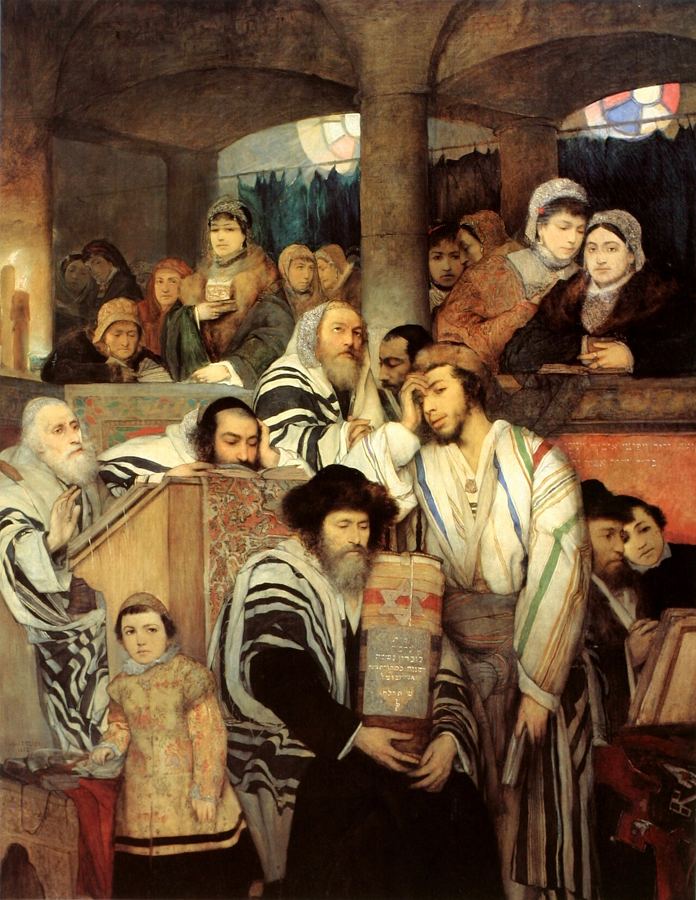
What happened. It is a promise with no deadline, which still runs. After losing its state in 586 BC, then Jerusalem after 70 and 135, the Jewish people remained identifiable in the dispersion and numbers about 15.7 million people in 2024, while Assyria and Babylon have disappeared. On the other hand, other nations of the dispersion that Jeremiah announces will be wiped out, such as Egypt or Persia, still exist.
What is still debated. a promise with no deadline and no criterion can be neither verified nor disproved; it is only compatible with the survival of the people.
What would be striking if the text came first
The small neighboring peoples, Philistines, Moabites or Edomites, have disappeared; Israel has not. Seeing a fulfillment in this remains a connection put forward by some readers: the date of the texts is debated, the promise has no deadline, and other scattered peoples have survived.
Main objection (in French for now)
La promesse n’a pas de terme : tant que le peuple subsiste, elle n’est ni accomplie ni démentie. Une affirmation qui ne peut échouer à aucune date donnée n’est pas une prédiction testable.
The text (World English Bible)
Yet for all that, when they are in the land of their enemies, I will not reject them, neither will I abhor them, to destroy them utterly and to break my covenant with them; for I am the LORD their God.
Lev 26:44
For I am with you, says the LORD, to save you; for I will make a full end of all the nations where I have scattered you, but I will not make a full end of you; but I will correct you in measure, and will in no way leave you unpunished.”
Jer 30:11
The LORD, who gives the sun for a light by day, and the ordinances of the moon and of the stars for a light by night, who stirs up the sea, so that its waves roar— the LORD of Armies is his name, says: “If these ordinances depart from before me,” says the LORD, “then the offspring of Israel also will cease from being a nation before me forever.” The LORD says: “If heaven above can be measured, and the foundations of the earth searched out beneath, then I will also cast off all the offspring of Israel for all that they have done,” says the LORD.
Jer 31:35-37
Sources
- World Jewish Population, 2024 (Sergio DellaPergola), American Jewish Year Book 2024 — Springer (Cham, 2025), PDF hébergé par le Bureau central des statistiques d’Israël
- Flavius Josèphe, Antiquités juives 14.7.2, citant Strabon (trad. W. Whiston) — Perseus Digital Library, Tufts University
- David Kimhi (Radaq), commentaire sur Jérémie 31:36 — Sefaria
- David Kimhi (Radaq), commentaire sur Jérémie 30:11 — Sefaria
- Rashi, commentaire sur Jérémie 30:11, trad. A. J. Rosenberg — Sefaria
- Commentaires classiques sur Jérémie 30:11 (Ellicott, JFB, Gill, Keil-Delitzsch et al.) — Bible Hub (textes du domaine public)
- Blaise Pascal, Pensées, fr. 619 (numérotation de la trad. W. F. Trotter) — Project Gutenberg
- Nahmanide (Ramban), commentaire sur Lévitique 26:16, trad. C. B. Chavel — Sefaria