Prophecy
The land laid waste, then “like the garden of Eden” (Leviticus 26:32-34, Ezekiel 36:8-11 and 36:34-35)
● Written before, according to historians
Written c. 1406–571 BC according to tradition; 585–450 BC according to historians. Event: c. 135–2024 AD.
See the full entry: sources, objections, answersIn short
The announcement. In the book of Leviticus, attributed to Moses, and in that of the prophet Ezekiel (around 593-571 BC), God announces that the land of Israel will be laid waste while the people are absent, then cultivated again and repopulated until it becomes “like the garden of Eden”.
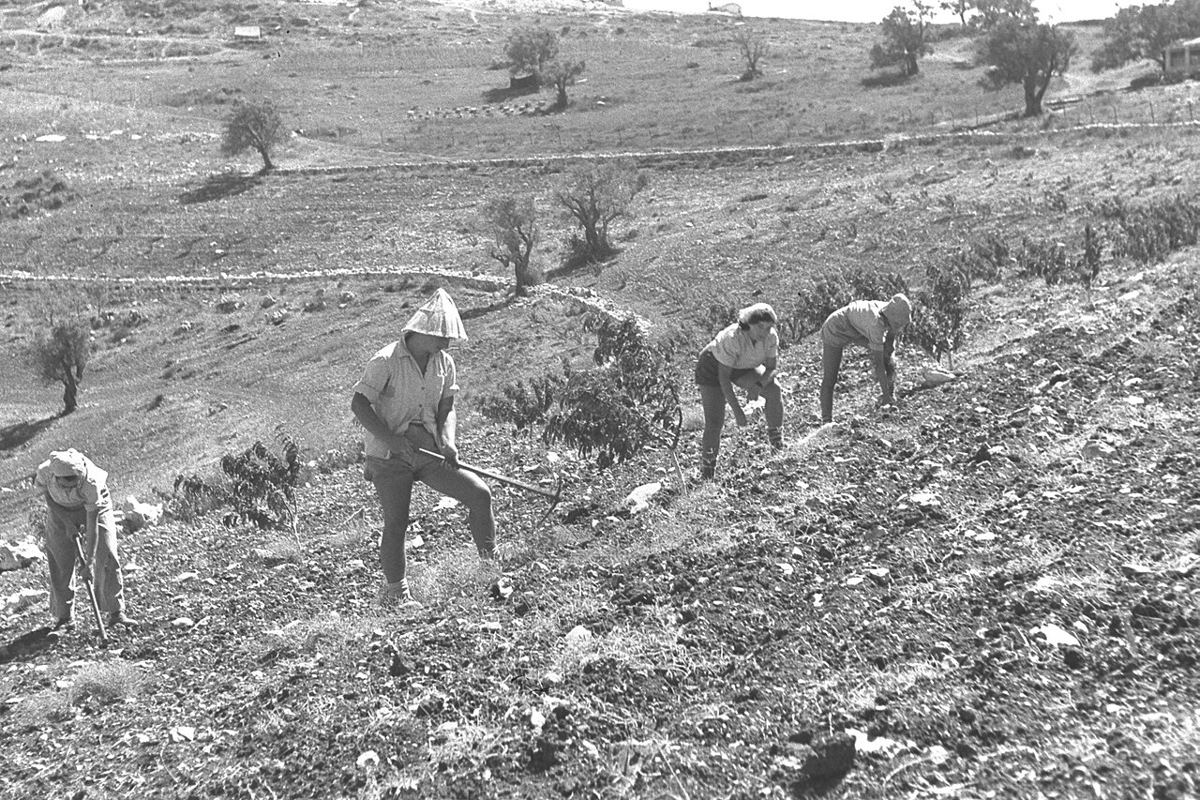
What happened. After 135, the Roman historian Cassius Dio describes a Judea almost entirely desolate, and in 1867 the writer Mark Twain still sees there “a hopeless land”. Since the end of the 19th century, agricultural settlements, irrigation and reforestation have transformed part of the landscape, and the population has grown sharply.
What is still debated. the text first has in view the return from Babylon, and the image of an empty land before the 20th century is exaggerated, since Ottoman Palestine had several hundred thousand inhabitants and active agriculture.
Why it is striking
Some readers connect these texts with the land being farmed again and repopulated in the 20th century; this connection is not an established fulfillment. The primary meaning has in view the return from the Babylonian exile, and the image of an empty land before Zionism is exaggerated.
Main objection (in French for now)
Le sens premier est l’exil babylonien : 2 Ch 36:21 rattache explicitement le « repos » de la terre de Lv 26:34 aux soixante-dix ans de Jérémie, et Ez 36 annonce la restauration après 539.
The text (World English Bible)
I will bring the land into desolation, and your enemies who dwell in it will be astonished at it. I will scatter you among the nations, and I will draw out the sword after you. Your land will be a desolation, and your cities shall be a waste. Then the land will enjoy its Sabbaths as long as it lies desolate and you are in your enemies’ land. Even then the land will rest and enjoy its Sabbaths.
Lev 26:32-34
“‘“But you, mountains of Israel, you shall shoot out your branches and yield your fruit to my people Israel; for they are at hand to come. For, behold, I am for you, and I will come to you, and you will be tilled and sown. I will multiply men on you, all the house of Israel, even all of it. The cities will be inhabited and the waste places will be built. I will multiply man and animal on you. They will increase and be fruitful. I will cause you to be inhabited as you were before, and you will do better than at your beginnings. Then you will know that I am the LORD.
Ezek 36:8-11
The land that was desolate will be tilled instead of being a desolation in the sight of all who passed by. They will say, ‘This land that was desolate has become like the garden of Eden. The waste, desolate, and ruined cities are fortified and inhabited.’ Then the nations that are left around you will know that I, the LORD, have built the ruined places and planted that which was desolate. I, the LORD, have spoken it, and I will do it.”
Ezek 36:34-36
Sources
- Dion Cassius, Histoire romaine 69.12-14 (trad. E. Cary) — LacusCurtius (Bill Thayer), Université de Chicago
- Mark Twain, The Innocents Abroad (1869), chapitres XLVII, XLIX et LVI — Project Gutenberg
- World Jewish Population, 2024 (Sergio DellaPergola), American Jewish Year Book 2024 — Springer (Cham, 2025), PDF hébergé par le Bureau central des statistiques d’Israël
- Sifra, Behouqotaï, chap. 6:5, trad. S. Silverstein — Sefaria
- Nahmanide (Ramban), commentaire sur Lévitique 26:16, trad. C. B. Chavel — Sefaria
- Talmud de Babylone, Sanhédrin 98a (éd. William Davidson) — Sefaria
- Commentaires classiques sur Lévitique 26:32 (Ellicott, Barnes, Gill, Jamieson-Fausset-Brown et al.) — Bible Hub (textes du domaine public)
- Commentaires classiques sur Ézéchiel 36:35 (Ellicott, JFB, Poole, Gill et al.) — Bible Hub (textes du domaine public)