Prophecy
Peter’s death foretold (John 21:18-19)
○ Written after the events, according to historians; tradition dates it before
Written c. 30–100 AD according to tradition; c. 90–110 AD according to historians. Event: c. 64–67 AD.
See the full entry: sources, objections, answersIn short
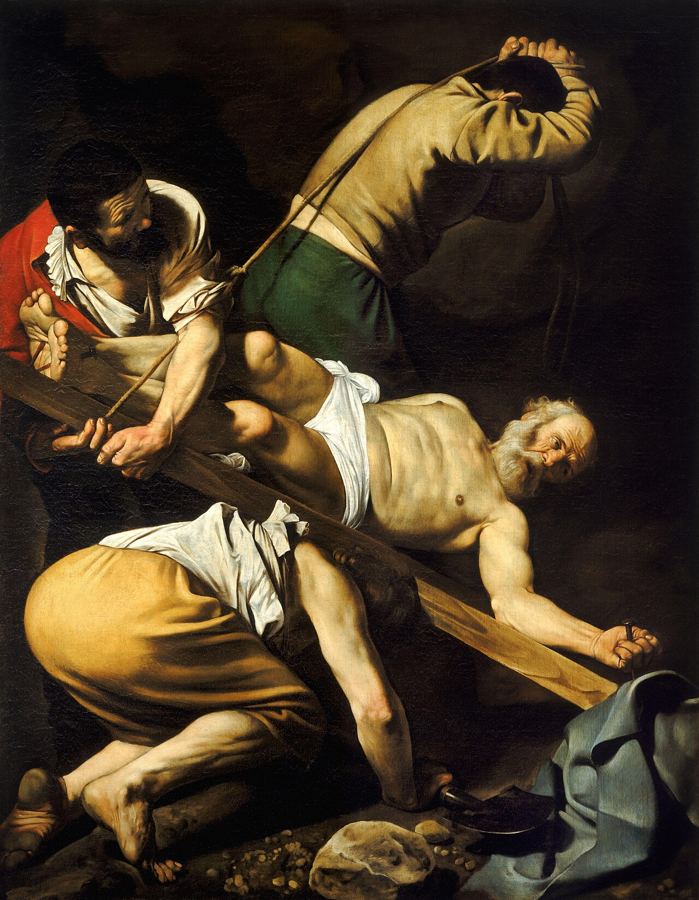
The announcement. In the Gospel of John, Jesus tells his disciple Peter, around 30-33, that in his old age he “will stretch out his hands” and that another will lead him where he does not want to go. The narrator specifies that this was a way of announcing Peter's death.
What happened. A letter written in Rome around 96 already counts Peter among the martyrs, and the Roman historian Tacitus reports that in 64, under Nero, Christians were crucified in Rome. Tradition places Peter's death around 64-67, but his crucifixion is only mentioned from about the year 200.
What is still debated. this last chapter of John was probably written after Peter's death, and the text itself lets this show.
What would be striking if the text came first
The Roman historian Tacitus, hostile to Christians, confirms that in 64 Nero had Christians crucified in Rome, and from the 3rd century this verse is read as a crucifixion. But according to historians, the text was written after Peter’s death.
Main objection (in French for now)
Prophétie après coup, par construction : Jn 21:19 est un commentaire du narrateur qui interprète la parole à la lumière d’une mort déjà connue. Le chapitre 21 est généralement tenu pour un épilogue rédigé après la mort de Pierre, peut-être après celle du disciple bien-aimé (Jn 21:23).
The text (World English Bible)
Most certainly I tell you, when you were young, you dressed yourself and walked where you wanted to. But when you are old, you will stretch out your hands, and another will dress you and carry you where you don’t want to go.” Now he said this, signifying by what kind of death he would glorify God. When he had said this, he said to him, “Follow me.”
John 21:18-19
Sources
- Première épître de Clément aux Corinthiens, chap. 5-6 — New Advent (trad. Ante-Nicene Fathers)
- Tacite, Annales XV, 44 (trad. J. Jackson, Loeb) — LacusCurtius (Bill Thayer), Université de Chicago
- Tertullien, Scorpiace 15 — New Advent (trad. Ante-Nicene Fathers)
- Eusèbe de Césarée, Histoire ecclésiastique II, 25 — New Advent (trad. Nicene and Post-Nicene Fathers)
- Eusèbe de Césarée, Histoire ecclésiastique III, 1 — New Advent (trad. Nicene and Post-Nicene Fathers)
- Is St. Peter really buried beneath the Vatican? (Elena Castillo) — National Geographic History
- St. Peter the Apostle — Tradition of Peter in Rome — Encyclopaedia Britannica
- Gospel According to John — Encyclopaedia Britannica