Prophecy
The fall of Nineveh (Nahum)
◐ Written shortly before or at the time: it cannot be decided
Written c. 663–650 BC according to tradition; c. 626–612 BC according to historians. Event: 612 BC.
See the full entry: sources, objections, answersIn short
The announcement. The prophet Nahum, in the book that bears his name, around 663–650 BC according to tradition (around 626–612 according to historians), announces that Nineveh, the capital of Assyria, will be destroyed beyond remedy.
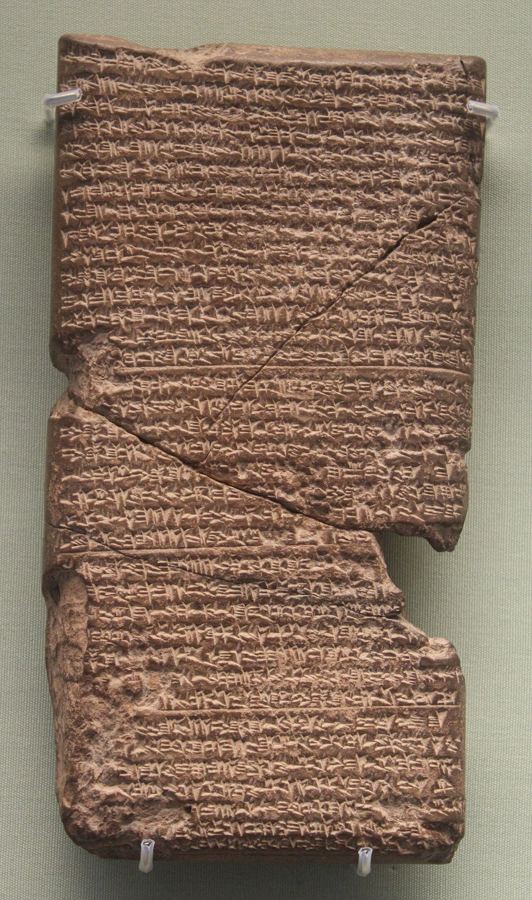
What happened. In 612 BC, the Babylonians and the Medes besiege Nineveh for three months, plunder it and “turn it into heaps of ruins”. It is a chronicle written by the victors themselves that tells of it. Nineveh never becomes a capital again.
What is still debated. if the text dates from the years 620–612 BC, Assyria's collapse was already visible, and predicting its fall required no special knowledge of the future.
What would be striking if the text came first
If Nahum writes around 663–650 BC, as tradition holds, Assyria has just crushed Egypt: announcing the ruin of its capital went against all the evidence. Historians instead place the text around 626–612, when the empire was already tottering.
Main objection (in French for now)
Si Nahoum date des années 620–612 (position critique fréquente), l’effondrement assyrien était déjà visible : révolte de Babylone dès 626, prise d’Assur par les Mèdes en 614. Prévoir la chute ne demandait alors aucune révélation.
The text (World English Bible)
A revelation about Nineveh. The book of the vision of Nahum the Elkoshite.
Nah 1:1
It will happen that all those who look at you will flee from you, and say, ‘Nineveh is laid waste! Who will mourn for her?’ Where will I seek comforters for you?” Are you better than No-Amon, who was situated among the rivers, who had the waters around her, whose rampart was the sea, and her wall was of the sea? Cush and Egypt were her boundless strength. Put and Libya were her helpers. Yet was she carried away. She went into captivity. Her young children also were dashed in pieces at the head of all the streets, and they cast lots for her honorable men, and all her great men were bound in chains.
Nah 3:7-10
Sources
- ABC 3 (Chronique de la chute de Ninive), BM 21901 — Livius.org, d’après A. K. Grayson
- Nineveh (ancient city, Iraq) — Encyclopaedia Britannica
- Pausanias, Description de la Grèce 8.33.2-3 (trad. W. H. S. Jones) — Theoi Classical Texts Library
- Nahum (Old Testament prophet) — Encyclopaedia Britannica
- Tanutamon — Encyclopaedia Britannica
- 4Q Pesher Nahum (4Q169) — Leon Levy Dead Sea Scrolls Digital Library, Israel Antiquities Authority
- Pharisees and Sadducees in Pesher Nahum (Lawrence H. Schiffman) — Center for Online Judaic Studies
- Flavius Josèphe, Antiquités judaïques, livre IX (trad. W. Whiston) — Internet Sacred Text Archive