Prophecy
Zechariah 9:1-8 and Alexander’s campaign along the coast
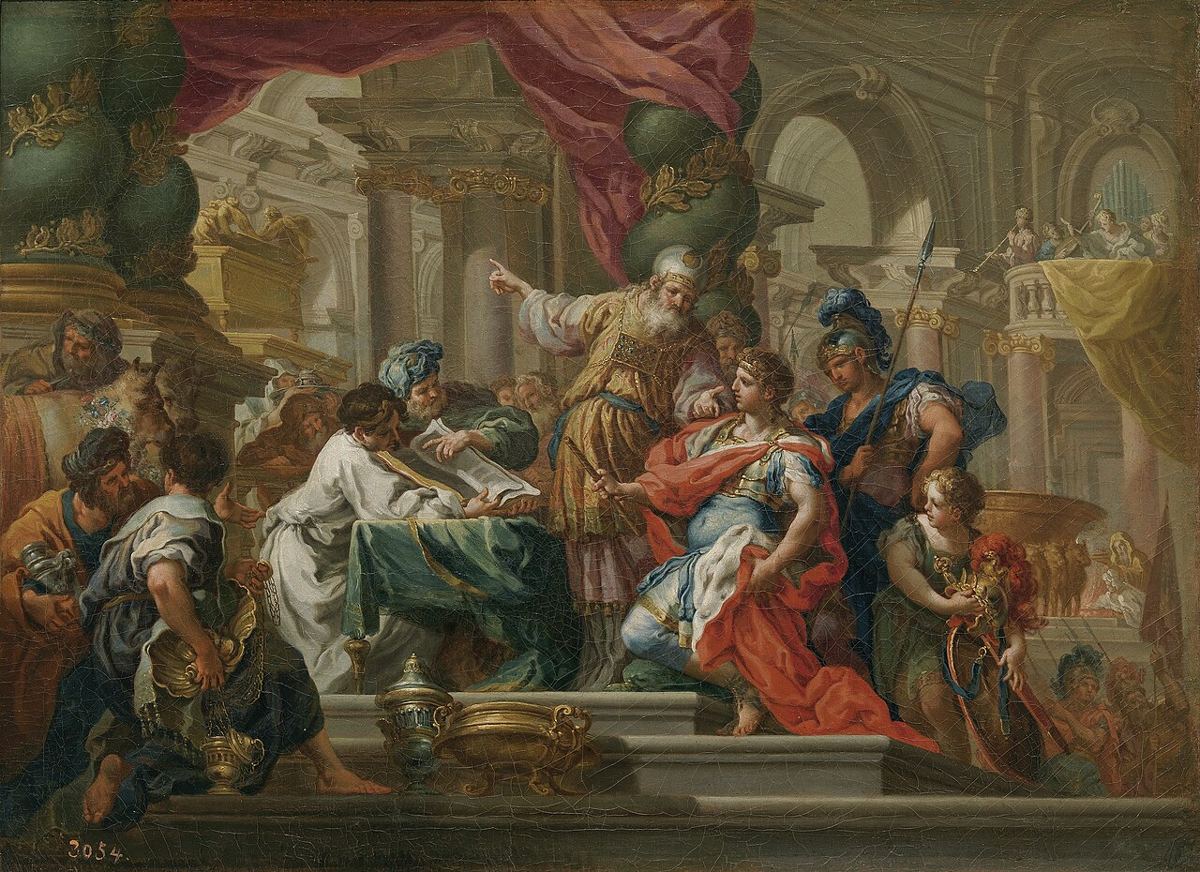
◐ Written shortly before or at the time: it cannot be decided
Written 520–470 BC according to tradition; c. 400–301 BC according to historians. Event: 333–332 BC.
See the full entry: sources, objections, answersIn short
The announcement. The prophet Zechariah, in the book that bears his name (from 520 BC according to tradition, in the 4th century BC according to many scholars), describes a campaign that comes down from Syria toward the coast, strikes Tyre by sea and fire, makes the king of Gaza disappear and spares Jerusalem.
What happened. In 333–332 BC, Alexander the Great subdues the coast. Tyre falls after a seven-month siege, then Gaza is taken: its defenders are killed and its governor Batis is executed. But Ashkelon remains inhabited, and the protection of Jerusalem rests only on an account by Josephus that most historians consider legendary.
What is still debated. Alexander is not named, and if the text was written in the 4th century BC, it could describe the campaign after the fact.
What would be striking if the text came first
The text even names Greece as an adversary, and Jerusalem, which it spares, was not attacked. The connection with Alexander is a reading, since the text does not name him; it is striking if the chapter does date from before, which cannot be settled.
Main objection (in French for now)
La critique majoritaire date Deutéro-Zacharie du IVe siècle av. J.-C. (Britannica) : une rédaction après 332 en ferait une description après coup. D’autres le placent beaucoup plus tôt, parce que Hadrac (Hatarikka) est un nom de l’époque assyrienne — ce qui ferait viser d’autres campagnes.
The text (World English Bible)
A revelation. The LORD’s word is against the land of Hadrach, and will rest upon Damascus— for the eye of man and of all the tribes of Israel is toward the LORD— and Hamath, also, which borders on it, Tyre and Sidon, because they are very wise. Tyre built herself a stronghold, and heaped up silver like the dust, and fine gold like the mire of the streets. Behold, the Lord will dispossess her, and he will strike her power in the sea; and she will be devoured with fire. Ashkelon will see it, and fear; Gaza also, and will writhe in agony; as will Ekron, for her expectation will be disappointed; and the king will perish from Gaza, and Ashkelon will not be inhabited. Foreigners will dwell in A…
Zech 9:1-8
Sources
- Deutero-Zechariah — Encyclopaedia Britannica
- Arrien, Anabase d’Alexandre II.25-27 (trad. E. J. Chinnock, 1884) — Project Gutenberg
- Quinte-Curce 4.6.26-29 : Alexandre tue Batis (trad. J. Yardley) — Livius.org
- Josephus on Alexander’s visit to Jerusalem (Antiquités 11.317-345, avec commentaire) — Livius.org
- Commentaires sur Zacharie 9:1 (Barnes, JFB, Benson, Keil-Delitzsch, Pulpit) — Bible Hub (textes de commentaires du domaine public)
- Commentaires sur Zacharie 9:8 (Barnes, Cambridge, Pulpit, JFB) — Bible Hub (textes de commentaires du domaine public)
- Rashi sur Zacharie 9:1 (d’après le Sifré Deutéronome) — Sefaria (texte consulté via l’API v3)