Prophecy
The broken rod: the end of the Assyrian empire (Isaiah 10, Zephaniah 2:13-15)
◐ Written shortly before or at the time: it cannot be decided
Written c. 730–609 BC according to tradition; c. 701–612 BC according to historians. Event: 612–609 BC.
See the full entry: sources, objections, answersIn short
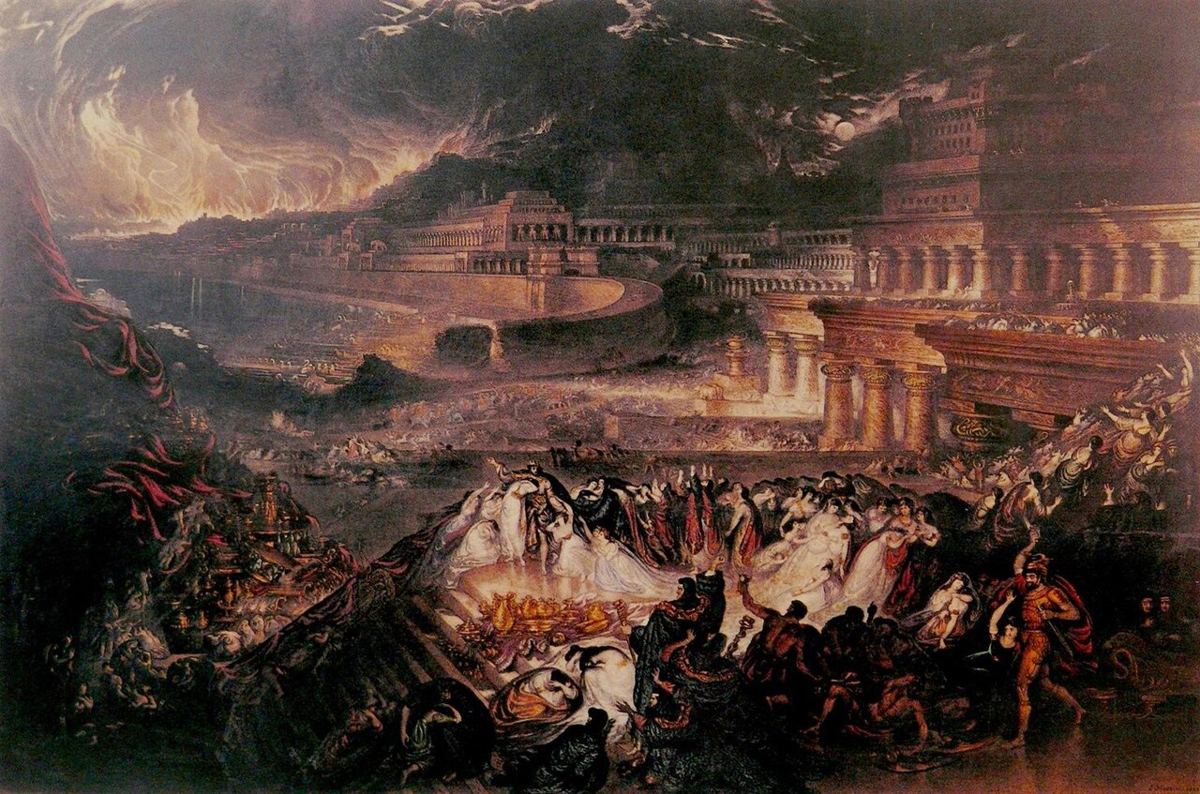
The announcement. The prophets Isaiah (around 730–701 BC) and Zephaniah (between 640 and 609 BC) announce that Assyria, the empire that then dominates the whole Near East, will be broken and that Nineveh, its capital, will become a desert.
What happened. Nineveh is taken in 612 BC. Harran, the last Assyrian capital, falls in 610, and the attempt to retake it fails in 609: Assyria then disappears as a state and is never rebuilt.
What is still debated. some scholars think part of the texts, notably a verse of Zephaniah that already describes ruins, was written or reworked when Assyria's decline was visible, or even after 612.
What would be striking if the text came first
Around 640–630 BC, Assyria has just crushed Babylon and Elam; a generation later, it no longer exists. Some verses may, however, have been reworked when the decline was becoming visible: the exact gap cannot be settled.
Main objection (in French for now)
So 2:15 (« Eh quoi ! Elle est en ruines ») décrit déjà des ruines : plusieurs commentateurs tiennent So 2:13-15, ou au moins le v. 15, pour un ajout postérieur à 612.
The text (World English Bible)
Alas Assyrian, the rod of my anger, the staff in whose hand is my indignation! I will send him against a profane nation, and against the people who anger me I will give him a command to take the plunder and to take the prey, and to tread them down like the mire of the streets. However, he doesn’t mean so, neither does his heart think so; but it is in his heart to destroy, and to cut off not a few nations.
Isa 10:5-7
Therefore it will happen that when the Lord has performed his whole work on Mount Zion and on Jerusalem, I will punish the fruit of the willful proud heart of the king of Assyria, and the insolence of his arrogant looks.
Isa 10:12
He will stretch out his hand against the north, destroy Assyria, and will make Nineveh a desolation, as dry as the wilderness. Herds will lie down in the middle of her, all kinds of animals. Both the pelican and the porcupine will lodge in its capitals. Their calls will echo through the windows. Desolation will be in the thresholds, for he has laid bare the cedar beams. This is the joyous city that lived carelessly, that said in her heart, “I am, and there is no one besides me.” How she has become a desolation, a place for animals to lie down in! Everyone who passes by her will hiss and shake their fists.
Zeph 2:13-15
Sources
- ABC 3 (Chronique de la chute de Ninive), BM 21901 — Livius.org, d’après A. K. Grayson
- Ashur-uballit II — Encyclopaedia Britannica
- Book of Zephaniah — Encyclopaedia Britannica
- Grand rouleau d’Ésaïe (1QIsaᵃ), Digital Dead Sea Scrolls — Musée d’Israël, Jérusalem
- Keil & Delitzsch — Introduction à Sophonie (sur So 1) — Keil & Delitzsch, Biblical Commentary on the Old Testament (Bible Hub)
- Keil & Delitzsch — Commentaire de Sophonie 2 — Keil & Delitzsch, Biblical Commentary on the Old Testament (Bible Hub)
- Rashi sur Ésaïe 10:5-27 — Sefaria (trad. A. J. Rosenberg, Judaica Press)