Prophecy
“The scepter will not depart from Judah… until Shiloh comes” (Genesis 49:10)
● Written before, according to historians
Written c. 1400–1250 BC according to tradition; c. 1000–500 BC according to historians. Event: 6 AD.
See the full entry: sources, objections, answersIn short
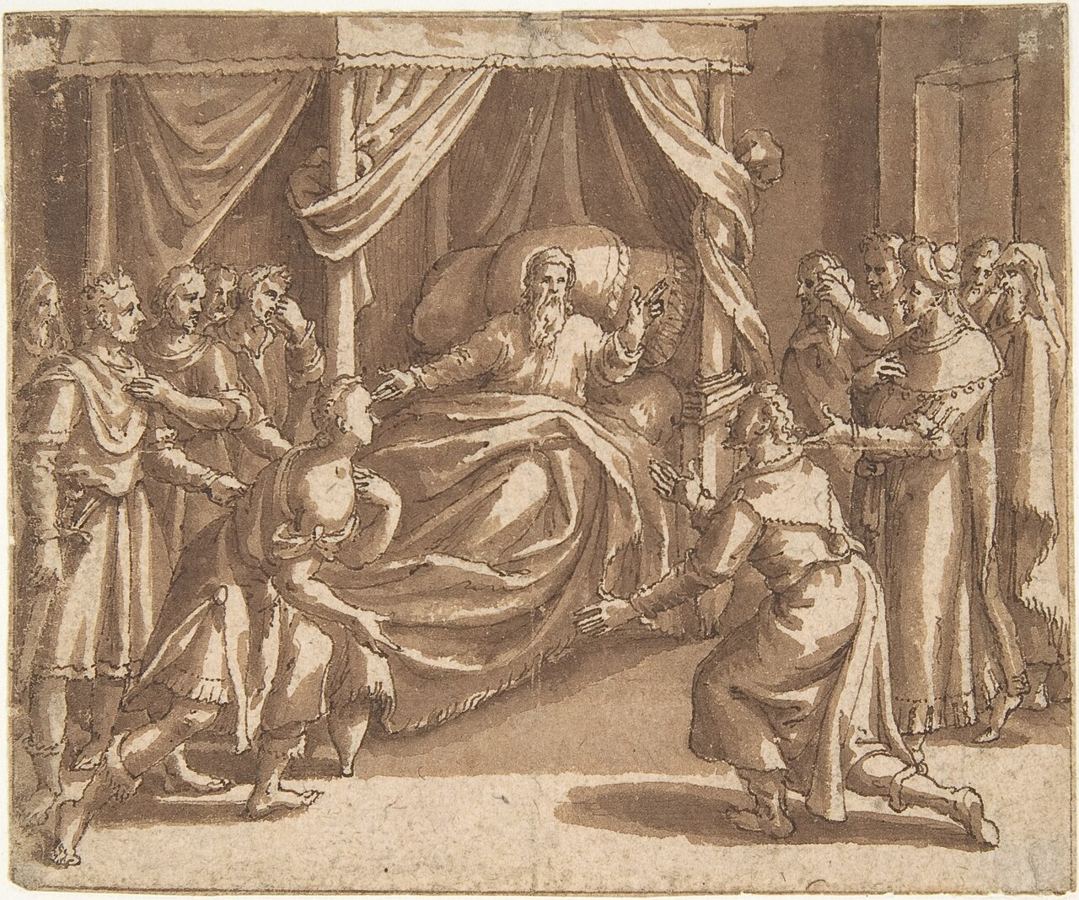
The announcement. In the book of Genesis, the patriarch Jacob blesses his son Judah: “the scepter will not depart from Judah… until Shiloh comes”. Tradition places this text in the time of Moses (around 1400–1250 BC), scholars between the 10th and the 6th century BC.
What happened. Ancient Jewish translations understand “Shiloh” as the Messiah. Christians see Jesus in it, presented as coming from the tribe of Judah, and note that in AD 6 Judea comes under direct Roman administration. But kingship had already left the line of Judah in 586 BC.
What is still debated. the very meaning of the word “Shiloh” is obscure, and the date when the scepter leaves Judah depends on which event one chooses.
Why it is striking
So the expectation of a coming king from Judah existed in Judaism before Christians read Jesus into it, presented as coming from this tribe. The meaning of “Shiloh” remains obscure, and any precise reading is a reconstruction.
Main objection (in French for now)
« Schilo » est obscur : nom propre messianique, « celui à qui appartient [le sceptre] », ou la ville de Silo. Toute lecture précise est une reconstruction, et le Nouveau Testament ne cite jamais Gn 49:10 comme accompli.
The text (World English Bible)
The scepter will not depart from Judah, nor the ruler’s staff from between his feet, until he comes to whom it belongs. The obedience of the peoples will be to him.
Gen 49:10
Sources
- Targum Onqelos sur Genèse 49:10 — Sefaria
- Rashi sur Genèse 49:10 — Sefaria
- Talmud de Babylone, Avoda Zara 8b — Sefaria
- Flavius Josèphe, Antiquités juives 18.1.1 (18.1-10), trad. W. Whiston — Perseus Digital Library, Tufts University
- 4Q Commentary on Genesis A (4Q252) — Leon Levy Dead Sea Scrolls Digital Library, Israel Antiquities Authority
- Talmud de Babylone, Sanhédrin 98b — Sefaria (éd. William Davidson)
- Nahmanide (Ramban) sur Genèse 49:10 — Sefaria (trad. C. B. Chavel)
- Justin, Première Apologie 32-35 et 48 — New Advent (ANF 1)