Prophecy
“They will look to the one whom they have pierced” (Zechariah 12:10)
● Written before, according to historians
Written c. 520–480 BC according to tradition; c. 400–180 BC according to historians. Event: 30–33 AD.
See the full entry: sources, objections, answersIn short
The announcement. The prophet Zechariah (around 520–480 BC according to tradition, in the 4th–3rd centuries BC according to many scholars) announces that the inhabitants of Jerusalem “will look to the one whom they have pierced” and will mourn for him.
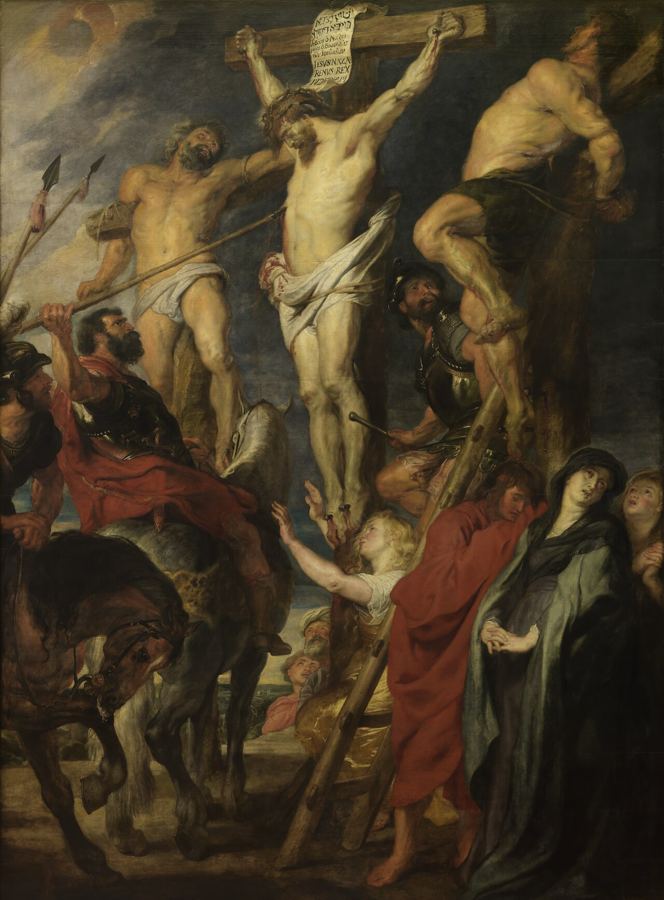
What happened. Only the Gospel of John tells that a soldier pierced the side of the crucified Jesus with a spear, in AD 30 or 33, and it immediately quotes this verse. Jerusalem's turning and the great mourning did not happen: the New Testament itself places them at a future coming.
What is still debated. the spear thrust is reported only by John, who builds his account around the verse, and Jewish tradition reads the text as Israel's mourning for its own dead.
Why it is striking
A figure pierced and then mourned by a whole city is rare in the Hebrew Bible. Christians read in it the spear thrust into Jesus’s side, which only John reports; the conversion of Jerusalem that is announced is still to come, according to the New Testament itself.
Main objection (in French for now)
Le coup de lance n’est rapporté que par Jean, qui cite immédiatement Za 12:10 et un autre texte (« aucun de ses os ne sera brisé », Jn 19:36) : le récit est explicitement construit pour montrer l’accomplissement.
The text (World English Bible)
I will pour on David’s house and on the inhabitants of Jerusalem the spirit of grace and of supplication. They will look to me whom they have pierced; and they shall mourn for him as one mourns for his only son, and will grieve bitterly for him as one grieves for his firstborn.
Zech 12:10
Sources
- Talmud de Babylone, Soukka 52a — Sefaria
- Rashi sur Zacharie 12:10 — Sefaria
- Tacite, Annales 15.44 (trad. A. J. Church & W. J. Brodribb) — Perseus Digital Library, Tufts University
- Dating the Crucifixion (C. J. Humphreys & W. G. Waddington) — Nature 306, 743-746
- The Book of Ben Sira — Introduction (G. A. Rendsburg & J. Binstein) — Department of Jewish Studies, Rutgers University
- Siracide (Ecclésiastique) 49:10, World English Bible — eBible.org (domaine public)
- Keil & Delitzsch — Commentaire de Zacharie 12:10 — Keil & Delitzsch, Biblical Commentary on the Old Testament (Bible Hub)
- Justin, Première Apologie 32-35 et 48 — New Advent (ANF 1)