Prophecy
The blind see, the deaf hear, the lame walk (Isaiah 35:5-6; 61:1)
◆ Written before: a dated manuscript proves it
Written c. 740–700 BC according to tradition; c. 550–400 BC according to historians. Event: c. 28–33 AD.
See the full entry: sources, objections, answersIn short
The announcement. The prophet Isaiah (around 740–700 BC according to tradition, in the 6th century BC or later according to many scholars) announces a time when the blind will see, the deaf will hear and the lame will walk.
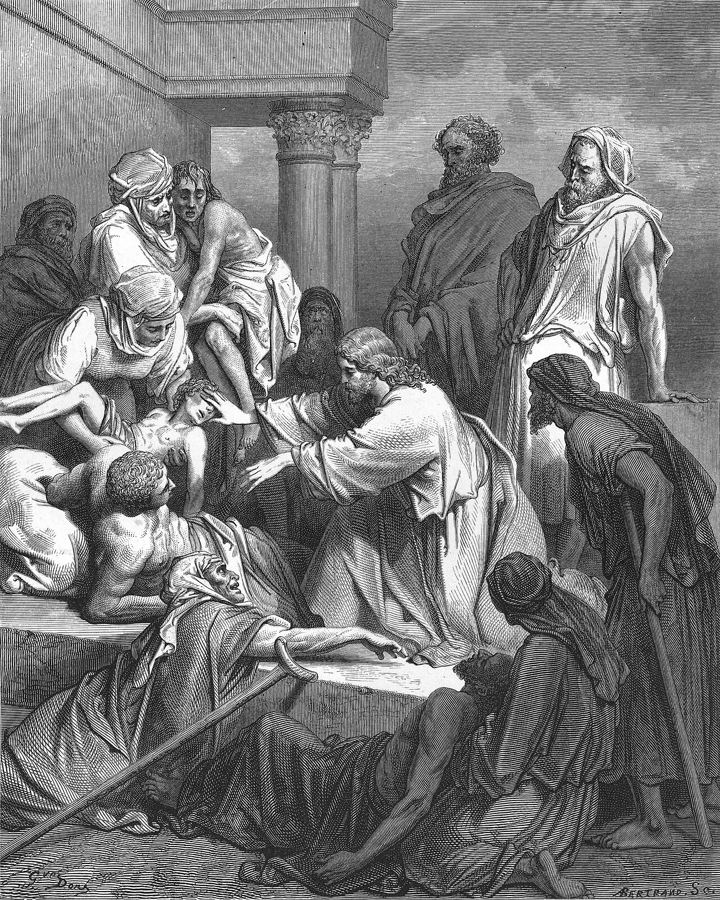
What happened. The Gospels present Jesus, around AD 28–30 (or 33), as a healer, and he answers the messengers of John the Baptist with a list drawn from Isaiah. Even sources hostile to him grant him a reputation as a wonder-worker. The healings themselves cannot be verified.
What is still debated. Isaiah's text speaks first of the return from exile and of the coming of God himself, not of a messiah, and it is Jesus or his biographers who make the link.
Why it is striking
A Qumran manuscript copied before Jesus was already expecting, for the time of the Messiah, the blind healed, the dead raised and good news for the poor: the very combination in his answer. The link is a Christian reading; the healings remain unverifiable.
Main objection (in French for now)
Es 35 parle d’abord du retour d’exil et d’un désert qui fleurit ; c’est Dieu lui-même qui vient (Es 35:4), non un messie. Les guérisons y sont l’image d’une restauration.
The text (World English Bible)
Then the eyes of the blind will be opened, and the ears of the deaf will be unstopped. Then the lame man will leap like a deer, and the tongue of the mute will sing; for waters will break out in the wilderness, and streams in the desert.
Isa 35:5-6
Sources
- Die Bedeutung der Täuferanfrage in Matthäus 11,2-6 par Lk 7,18-23 für die Christologie (Hanna Stettler) — Biblica 89 (2008), 173-200
- 4Q Messianic Apocalypse (4Q521) — Leon Levy Dead Sea Scrolls Digital Library, Israel Antiquities Authority
- Flavius Josèphe, Antiquités juives 18.3.3 (18.63-64), trad. W. Whiston — Perseus Digital Library, Tufts University
- Talmud de Babylone, Sanhédrin 43a (édition William Davidson) — Sefaria
- The Great Isaiah Scroll (1QIsa^a) — The Israel Museum, Jerusalem
- Dating ancient manuscripts using radiocarbon and AI-based writing style analysis (Popović et al.) — PLOS ONE 20(6), DOI 10.1371/journal.pone.0323185
- Calvin — Commentaire d’Ésaïe 35 — Calvin, Commentaries (Bible Hub)
- Bereshit Rabba 95:1 — Sefaria (Midrash Rabbah, 2022)