Prophecy
Elisha’s arrows: Joash will defeat Aram three times (2 Kings 13)
○ Written after the events, according to historians; tradition dates it before
Written c. 800–796 BC according to tradition; c. 640–560 BC according to historians. Event: c. 800–785 BC.
See the full entry: sources, objections, answersIn short
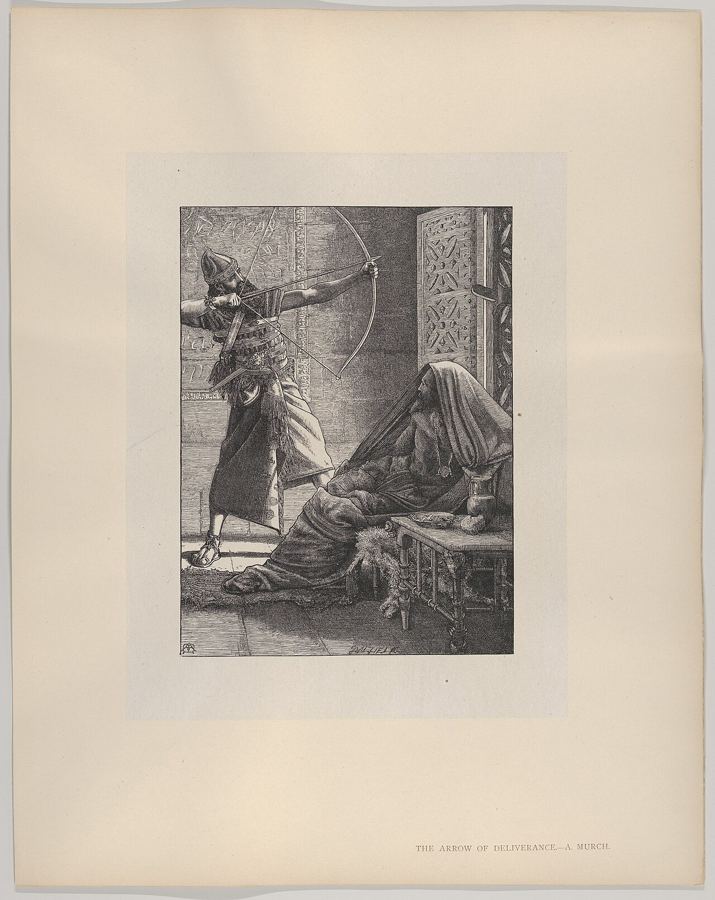
The announcement. The prophet Elisha, in the second book of Kings, around 800–796 BC, has King Joash of Israel shoot arrows and announces to him that he will defeat the Syrians three times.
What happened. An Assyrian stela names “Joash of Samaria” and shows Damascus crushed by tribute to Assyria at the same period. This makes Joash's recapture of towns plausible, but his three victories are told only by the Bible.
What is still debated. the text was written after the events, and Israel's recovery is already explained by the weakening of Damascus in the face of Assyria.
What would be striking if the text came first
The number is precise and modest: a partial reconquest rather than a total victory, and the stela explains why Aram was weakening. But only the book of Kings, written much later according to historians, reports these three victories.
Main objection (in French for now)
Le texte est postérieur aux faits ; un chiffre précis de victoires est facile à « prédire » quand on le connaît.
The text (World English Bible)
Now Elisha became sick with the illness of which he died; and Joash the king of Israel came down to him, and wept over him, and said, “My father, my father, the chariots of Israel and its horsemen!” Elisha said to him, “Take bow and arrows;” and he took bow and arrows for himself. He said to the king of Israel, “Put your hand on the bow;” and he put his hand on it. Elisha laid his hands on the king’s hands. He said, “Open the window eastward;” and he opened it. Then Elisha said, “Shoot!” and he shot. He said, “The LORD’s arrow of victory, even the arrow of victory over Syria; for you will strike the Syrians in Aphek until you have consumed them.” He said, “Take the arrows;” and he took th…
2 Kgs 13:14-19
Sources
- The Deuteronomic History (David Miano) — My Jewish Learning
- Adad-nārārī III, texte 7 : stèle de Tell al-Rimah (RIMA 3 A.0.104.7) — ORACC, Royal Inscriptions of Assyria online (RIAo)
- Jeroboam II — Encyclopaedia Judaica (Gale), via Encyclopedia.com
- Commentaires sur 2 Rois 13:19 (Pulpit, Keil-Delitzsch, Barnes, JFB, Matthew Henry) — Bible Hub (textes de commentaires du domaine public)
- Commentaires sur 2 Rois 13:5 (Keil-Delitzsch, Cambridge, Ellicott, Pulpit) — Bible Hub (textes de commentaires du domaine public)