Prophecy
The house of David established (2 Samuel 7)
○ Written after the events, according to historians; tradition dates it before
Written c. 1000–970 BC according to tradition; c. 640–560 BC according to historians. Event: c. 970–586 BC.
See the full entry: sources, objections, answersIn short
The announcement. In the second book of Samuel, around 1000–970 BC according to tradition, the LORD promises King David that his descendants will reign after him and that his house and his throne will be secured forever.
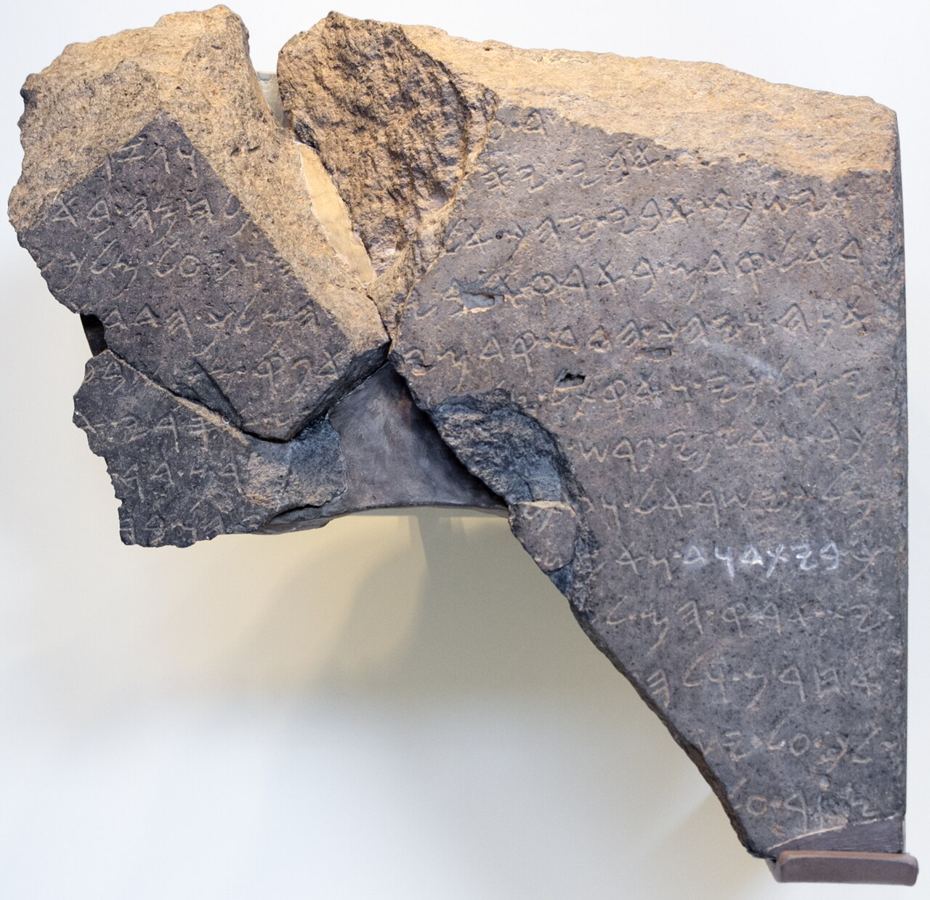
What happened. A single family, the “house of David”, reigns in Jerusalem until the city is taken in 586 BC. Around 840 BC, an enemy king already refers to it this way on the Tel Dan stela. After 586, no king of this line reigns again.
What is still debated. promising an eternal dynasty was common in royal texts of the time, and the throne did indeed come to an end in 586 BC.
What would be striking if the text came first
The neighboring kingdom to the north changes royal family about nine times in two centuries, often by assassination; Judah keeps a single line for about four centuries. Historians, however, date the promise to 640–560 BC, when this longevity was known.
Main objection (in French for now)
Promettre une dynastie éternelle est un lieu commun de l’idéologie royale du Proche-Orient ancien ; un texte de cour qui l’affirme ne prédit rien, il légitime.
The text (World English Bible)
When your days are fulfilled and you sleep with your fathers, I will set up your offspring after you, who will proceed out of your body, and I will establish his kingdom. He will build a house for my name, and I will establish the throne of his kingdom forever. I will be his father, and he will be my son. If he commits iniquity, I will chasten him with the rod of men and with the stripes of the children of men; but my loving kindness will not depart from him, as I took it from Saul, whom I put away before you. Your house and your kingdom will be made sure forever before you. Your throne will be established forever.”’”
2 Sam 7:12-16
Sources
- The Deuteronomic History (David Miano) — My Jewish Learning
- Tel Dan Stele, c. 840 BCE — Center for Online Judaic Studies
- Tel Dan Stele (exposition, 5 déc. 2024 – 5 janv. 2025) — The Jewish Museum (New York)
- Stèle de Mesha, roi de Moab (AO 5066) — Musée du Louvre, département des Antiquités orientales
- Why Mesha’s “House of David” Remains Hypothetical (Matthieu Richelle, Andrew Burlingame) — Biblical Archaeology Society
- Augustin, La Cité de Dieu, livre XVII (trad. anglaise M. Dods) — New Advent (Nicene and Post-Nicene Fathers, 1re série, vol. 2)
- Commentaires sur 2 Samuel 7:16 (Keil-Delitzsch, Matthew Henry, Gill, JFB, Geneva) — Bible Hub (textes de commentaires du domaine public)
- Maïmonide, Mishneh Torah, Lois des rois et de leurs guerres 11:1 — Sefaria (texte consulté via l’API v3)