Prophecy
Israel taken captive far from its land (Amos, Hosea)
● Written before, according to historians
Written c. 760–725 BC according to tradition; c. 760–725 BC according to historians. Event: 732–720 BC.
See the full entry: sources, objections, answersIn short
The announcement. The prophets Amos and Hosea, in the books that bear their names, around 760–725 BC, announce the end of the kingdom of Israel, in the north, and the deportation of its population far from its land, at a time when this kingdom is prosperous.
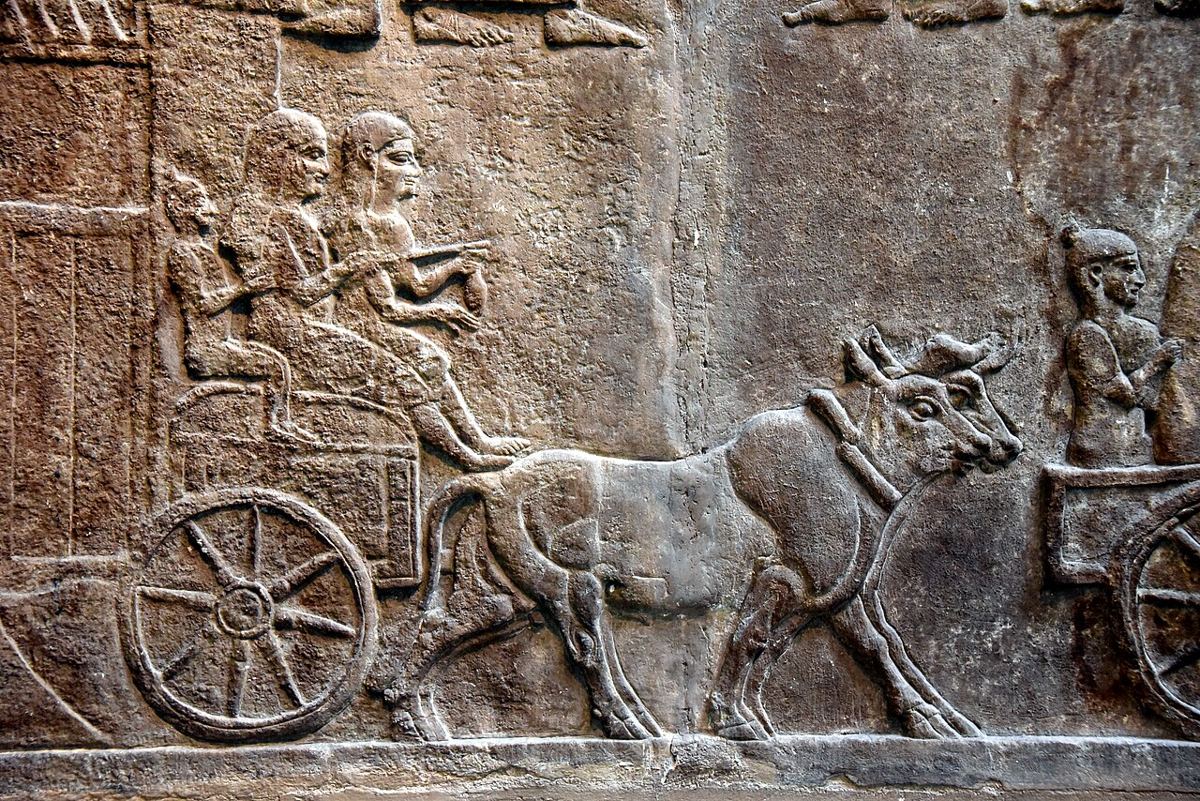
What happened. In 732 BC, Assyria deports the population of Galilee. Around 722–720 BC, Samaria is conquered, and the Assyrian king Sargon II says he carried off 27,290 of its inhabitants before settling other peoples in their place.
What is still debated. some of the most precise announcements may have been added by editors writing after the fall of Samaria, and Amos never names Assyria.
Why it is striking
Even historians date the announcement to before 745, when a new king of Assyria relaunches conquests toward the west. So the exile is announced before the rise of the power that would carry it out, and the figure comes from the victor himself.
Main objection (in French for now)
Une partie de la critique attribue les annonces d’exil les plus précises à des rédacteurs judéens postérieurs à 722, qui relisaient Amos et Osée à la lumière de la chute de Samarie ; le récit d’Am 7:10-17, où Amos est cité à la troisième personne, est souvent attribué à ses disciples.
The text (World English Bible)
Therefore I will cause you to go into captivity beyond Damascus,” says the LORD, whose name is the God of Armies.
Amos 5:27
For Amos says, ‘Jeroboam will die by the sword, and Israel shall surely be led away captive out of his land.’”
Amos 7:11
Therefore the LORD says: ‘Your wife shall be a prostitute in the city, and your sons and your daughters shall fall by the sword, and your land shall be divided by line; and you yourself shall die in a land that is unclean, and Israel shall surely be led away captive out of his land.’”
Amos 7:17
Sources
- The Annals of Sargon II, c. 722 BCE — Center for Online Judaic Studies
- ABC 1 (Chronique de Nabû-nasir à Šamaš-šuma-ukin) — Livius.org, d’après A. K. Grayson
- A New Historical Reconstruction of the Fall of Samaria (Sung Jin Park) — Biblica 93 (2012), p. 98-106, Institut biblique pontifical
- Questioning Prosperity — Amos, dans Opening Israel’s Scriptures — Oxford University Press (Oxford Academic)
- Rachi sur Amos 7:11 (trad. A. J. Rosenberg, Judaica Press) — Sefaria
- Commentaires classiques sur Amos 7:11 (Ellicott, Barnes) — Bible Hub (commentaires du domaine public)
- Commentaires classiques sur Amos 5:27 (Barnes) — Bible Hub (commentaires du domaine public)
- Commentaires classiques sur Osée 9:3 (Barnes, Benson) — Bible Hub (commentaires du domaine public)