Prophecy
The Suffering Servant (Isaiah 52:13 – 53:12)
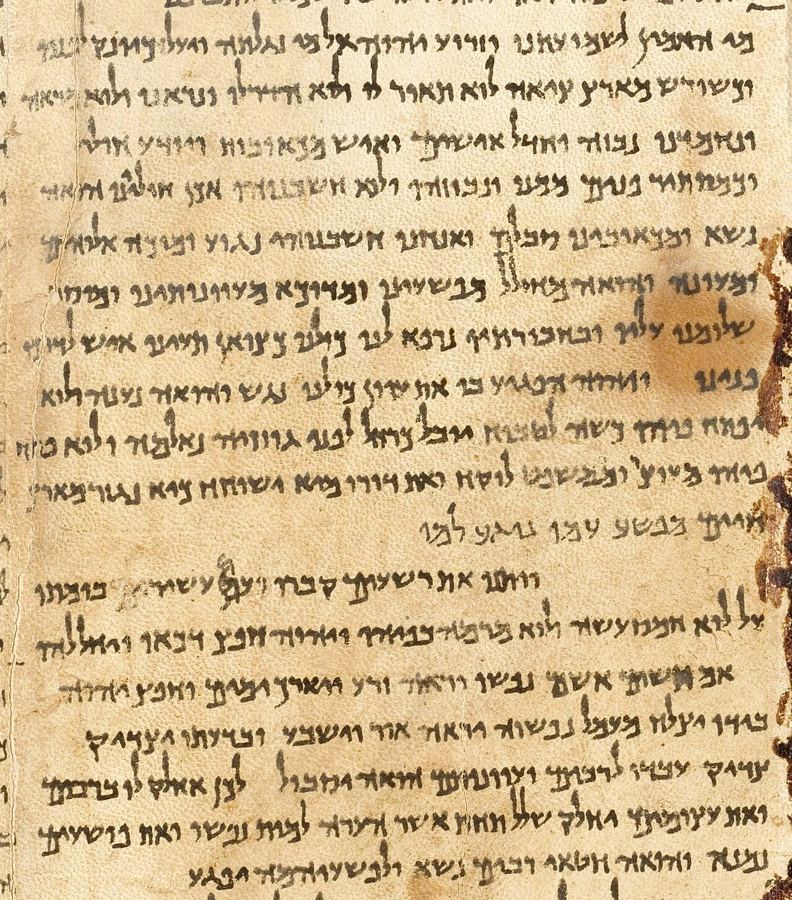
◆ Written before: a dated manuscript proves it
Written c. 740–700 BC according to tradition; c. 550–539 BC according to historians. Event: 30–33 AD.
See the full entry: sources, objections, answersIn short
The announcement. The prophet Isaiah, in the book of Isaiah, around 740–700 BC according to tradition (around 550–539 according to historians), describes an innocent and despised servant, struck “for our sins”, silent like a lamb, buried with a rich man, who then “prolongs his days”.
What happened. From the years 30–60, the first Christians apply this text to Jesus, crucified in 30 or 33. The passage was already being copied by around 100 BC at the latest: two laboratories have dated it on the great ancient Isaiah scroll.
What is still debated. the identity of the servant, since an ancient Jewish reading sees in it the whole people of Israel, and the Gospel writers may have told Jesus's death drawing on this text.
Why it is striking
A dated manuscript proves it: the text existed more than a century before Jesus, and no Christian could have retouched it. Christians read this servant as Jesus; Jewish tradition often sees in it the people of Israel itself.
Main objection (in French for now)
Lecture juive traditionnelle : le Serviteur est Israël personnifié. Rashi écrit que le prophète parle de « tout Israël comme d’un seul homme », et le contexte appelle Israël « mon serviteur » (Es 41:8 ; 44:1 ; 49:3).
The text (World English Bible)
Behold, my servant will deal wisely. He will be exalted and lifted up, and will be very high. Just as many were astonished at you— his appearance was marred more than any man, and his form more than the sons of men— so he will cleanse many nations. Kings will shut their mouths at him; for they will see that which had not been told them, and they will understand that which they had not heard.
Isa 52:13-15
He was despised and rejected by men, a man of suffering and acquainted with disease. He was despised as one from whom men hide their face; and we didn’t respect him. Surely he has borne our sickness and carried our suffering; yet we considered him plagued, struck by God, and afflicted. But he was pierced for our transgressions. He was crushed for our iniquities. The punishment that brought our peace was on him; and by his wounds we are healed. All we like sheep have gone astray. Everyone has turned to his own way; and the LORD has laid on him the iniquity of us all. He was oppressed, yet when he was afflicted he didn’t open his mouth. As a lamb that is led to the slaughter, and as a sheep…
Isa 53:3-12
Sources
- Radiocarbon Dating of Scrolls and Linen Fragments from the Judean Desert (A. J. T. Jull, D. J. Donahue, M. Broshi, E. Tov) — Radiocarbon 37(1), 11-19 (Cambridge University Press)
- Dating ancient manuscripts using radiocarbon and AI-based writing style analysis (Popović et al.) — PLOS ONE 20(6), DOI 10.1371/journal.pone.0323185
- The Great Isaiah Scroll (1QIsa^a) — The Israel Museum, Jerusalem
- Origène, Contre Celse, livre I (ch. 55) — New Advent (trad. Ante-Nicene Fathers)
- Targum Isaiah: Translation as Commentary (Asher Yiliang Chee) — Parkes Institute, University of Southampton
- Rashi sur Ésaïe 53:3 — Sefaria
- Flavius Josèphe, Guerre des Juifs 6.4.5 (trad. W. Whiston) — Perseus Digital Library, Tufts University
- Dating the Crucifixion (C. J. Humphreys & W. G. Waddington) — Nature 306, 743-746