Step still to come (one reading among others)
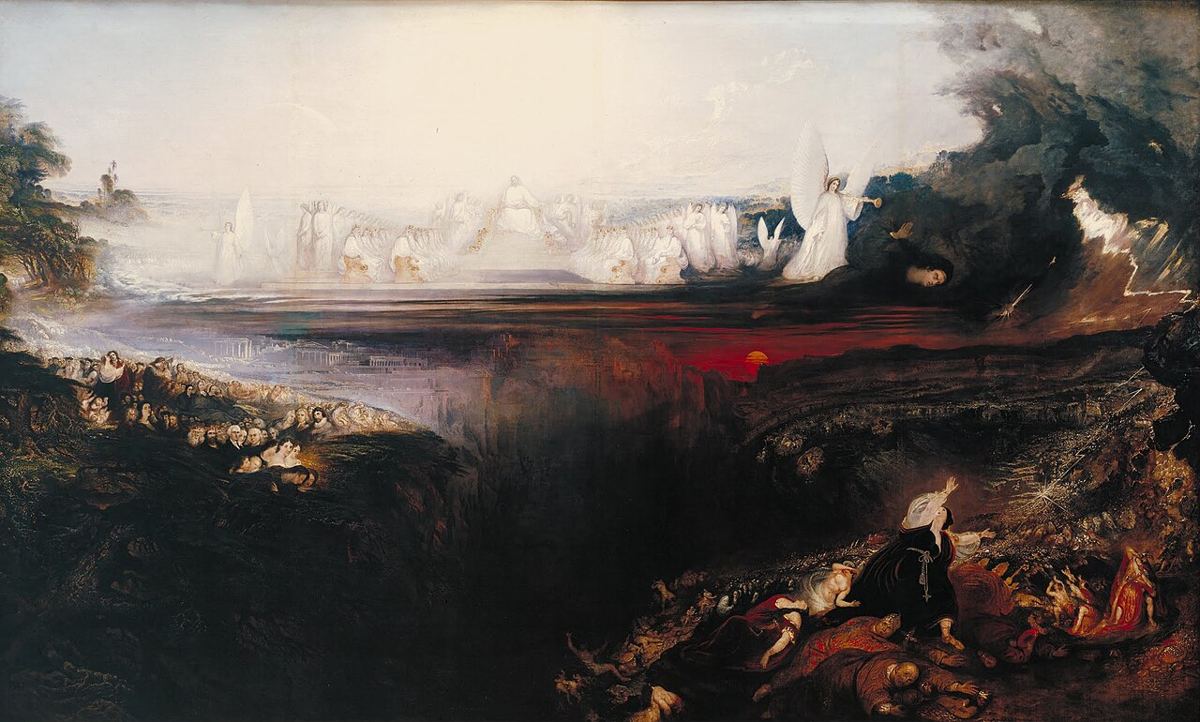
Judgment before the great white throne (Rev 20:11-15)
? Not yet happened, no date
See the full entry: sources, objections, answersMain objection (in French for now)
Lecture amillénariste et postmillénariste : ce jugement suit immédiatement la venue visible et la résurrection générale — Mt 25:31-32 place le jugement des nations « lorsque le Fils de l’homme viendra dans sa gloire », et Jn 5:28-29 annonce une seule « heure » où sortent des sépulcres ceux qui ont fait le bien et ceux qui ont fait le mal. Lecture prémillénariste : jugement distinct, séparé de la venue par les mille ans, et visant « les autres morts » d’Ap 20:5.
The text (World English Bible)
I saw a great white throne and him who sat on it, from whose face the earth and the sky fled away. There was found no place for them. I saw the dead, the great and the small, standing before the throne, and they opened books. Another book was opened, which is the book of life. The dead were judged out of the things which were written in the books, according to their works. The sea gave up the dead who were in it. Death and Hades gave up the dead who were in them. They were judged, each one according to his works. Death and Hades were thrown into the lake of fire. This is the second death, the lake of fire. If anyone was not found written in the book of life, he was cast into the lake of f…
Rev 20:11-15