Prophecy
Antiochus IV: the ships of Kittim, the sanctuary profaned, the abomination of the desolator (Daniel 11:21-35)
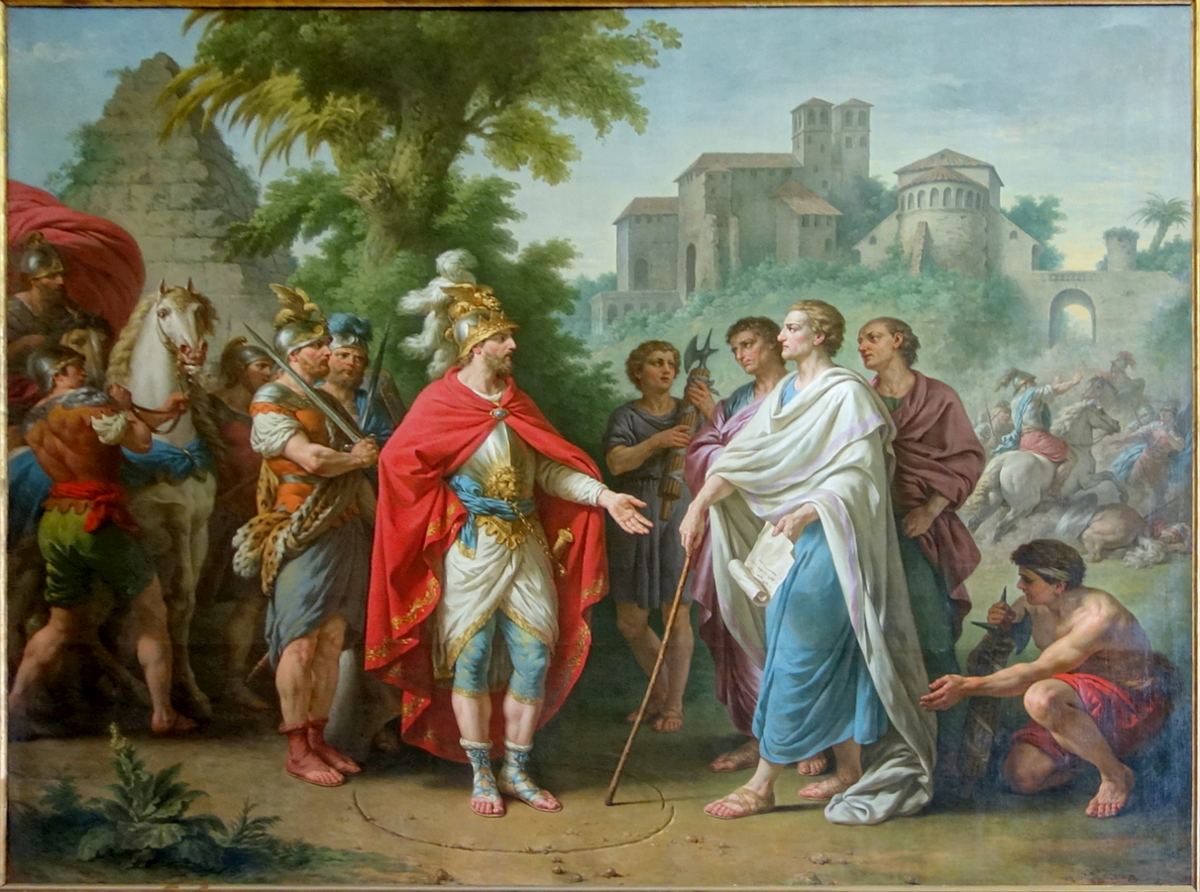
○ Written after the events, according to historians; tradition dates it before
Written c. 536 BC according to tradition; c. 167–164 BC according to historians. Event: 175–164 BC.
See the full entry: sources, objections, answersIn short
The announcement. The book of Daniel, in a vision dated around 536 BC (around 167–164 BC according to scholars), announces a king of the North who will be driven back by “ships of Kittim”, will profane the sanctuary and set up in it “the abomination of the desolator”.
What happened. The Greek king Antiochus IV plunders the Temple in Jerusalem in 169 BC. In 168, in Egypt, a Roman ambassador draws a circle around him and demands that he withdraw, and the king obeys. In December 167 BC, he has the Temple altar profaned, which sparks the Maccabean revolt. The Temple is purified in December 164 BC.
What is still debated. for most historians, this passage describes the author's own present, writing around 166–164 BC, and not a distant future.
What would be striking if the text came first
The text follows the exact order of events up to the profanation of the Temple, dated to the very day: December 6, 167 BC. For historians, this accuracy, which stops just afterward, shows that the author was writing at that moment; tradition dates it to 536.
Main objection (in French for now)
C’est l’argument central de la datation critique : le récit est exact jusqu’à la persécution de 167 et devient inexact pour la fin d’Antiochus (Dn 11:40-45). L’auteur écrit donc entre ces deux moments, vers 166–164 ; Porphyre l’avait vu au IIIe siècle.
The text (World English Bible)
“In his place a contemptible person will stand up, to whom they had not given the honor of the kingdom; but he will come in a time of security, and will obtain the kingdom by flatteries. The overwhelming forces will be overwhelmed from before him, and will be broken. Yes, also the prince of the covenant. After the treaty made with him he will work deceitfully; for he will come up and will become strong with few people. In a time of security he will come even on the fattest places of the province. He will do that which his fathers have not done, nor his fathers’ fathers. He will scatter among them prey, plunder, and wealth. Yes, he will devise his plans against the strongholds, but only fo…
Dan 11:21-31
He will corrupt those who do wickedly against the covenant by flatteries; but the people who know their God will be strong and take action. “Those who are wise among the people will instruct many; yet they will fall by the sword and by flame, by captivity and by plunder, many days. Now when they fall, they will be helped with a little help; but many will join themselves to them with flatteries. Some of those who are wise will fall—to refine them, and to purify, and to make them white, even to the time of the end, because it is yet for the time appointed.
Dan 11:32-35
Sources
- Polybe, Histoires, livre 29 (trad. W. R. Paton, Loeb) — LacusCurtius (Bill Thayer), University of Chicago
- 1 Maccabées, chapitre 1 (NABRE, avec notes) — United States Conference of Catholic Bishops
- 1 Maccabées, chapitre 4 (NABRE, avec notes) — United States Conference of Catholic Bishops
- Antiochus IV Epiphanes — Livius.org (Jona Lendering)
- Antiochus IV Epiphanes — Encyclopaedia Britannica
- Jérôme, Commentaire sur Daniel (trad. G. L. Archer, 1958) — tertullian.org (Roger Pearse)
- Dating ancient manuscripts using radiocarbon and AI-based writing style analysis (Popović et al.) — PLOS ONE 20(6), DOI 10.1371/journal.pone.0323185
- Redating the Dead Sea Scrolls and the Book of Daniel (I. Young, G. Wearne, E. Caddy) — The Bible and Interpretation (University of Arizona)