Prophecy
Antiochus III the Great: Raphia, Panium, his daughter given to the South, the failure against Rome (Daniel 11:10-20)
○ Written after the events, according to historians; tradition dates it before
Written c. 536 BC according to tradition; c. 167–164 BC according to historians. Event: 217–175 BC.
See the full entry: sources, objections, answersIn short
The announcement. The book of Daniel, in a vision dated around 536 BC (around 167–164 BC according to scholars), describes in detail the wars of a king of the North against the king of the South: a defeat, a victory, his daughter given in marriage, then a “commander” who stops his offensive toward the islands.
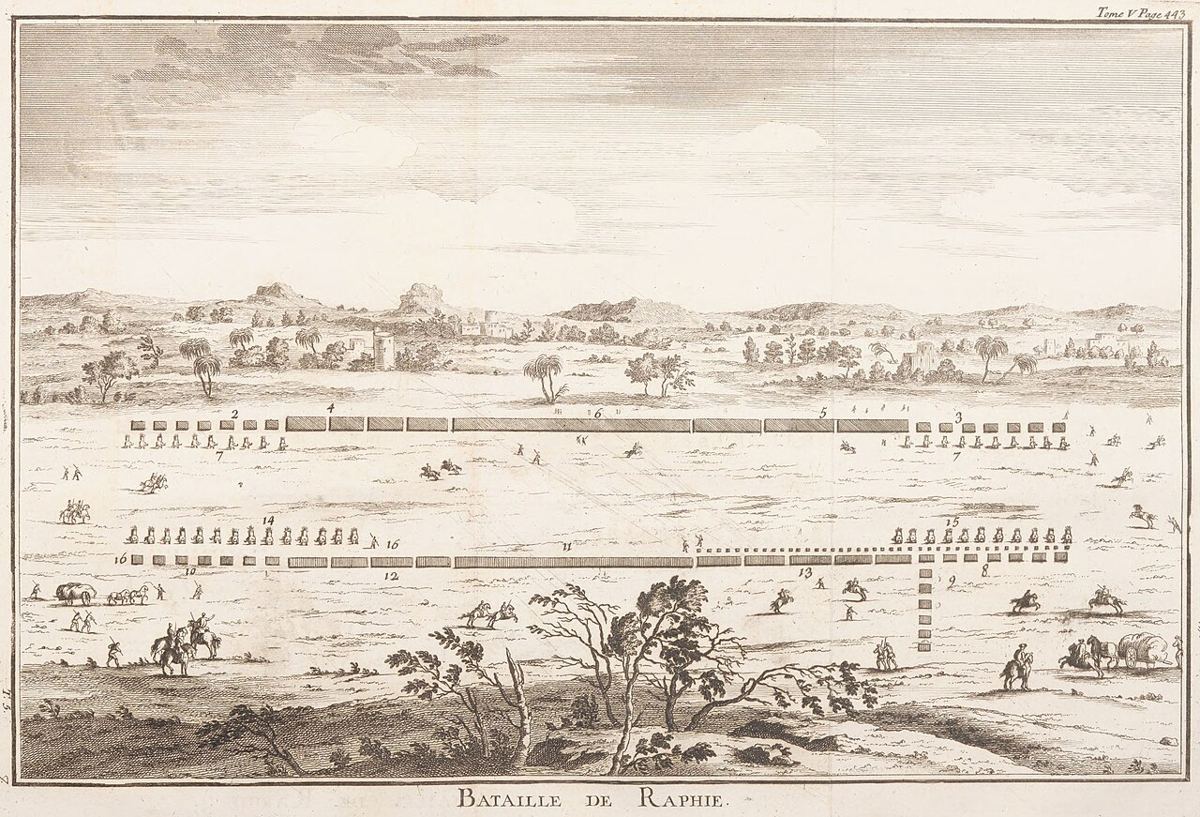
What happened. The Seleucid king Antiochus III is defeated at Raphia in 217 BC, wins at Panium around 200, gives his daughter Cleopatra in marriage to the king of Egypt in 194/193, then is crushed by Rome at Magnesia in 190 BC. His son Seleucus IV is assassinated in 175 BC.
What is still debated. the date of the text, because an account this precise up to that point, then inaccurate shortly after, leads historians to think the author is writing after these events.
What would be striking if the text came first
Over eleven verses, every episode has a dated counterpart in Greek and Roman historians, down to a tax detail confirmed by a stela from 178 BC. It is precisely this precision that leads historians to date the text after the events, around 167–164.
Main objection (in French for now)
C’est précisément la précision de ce passage qui fonde la datation critique : un récit aussi détaillé, puis inexact à partir de Dn 11:40, trahit un auteur qui écrit après ces faits et avant la mort d’Antiochus IV. Porphyre le soutenait déjà au IIIe siècle.
The text (World English Bible)
His sons will wage war, and will assemble a multitude of great forces which will come on, and overflow, and pass through. They will return and wage war, even to his fortress. “The king of the south will be moved with anger and will come out and fight with him, even with the king of the north. He will send out a great multitude, and the multitude will be given into his hand. The multitude will be carried off, and his heart will be exalted. He will cast down tens of thousands, but he won’t prevail. The king of the north will return, and will send out a multitude greater than the former. He will come on at the end of the times, even of years, with a great army and with abundant supplies. “In…
Dan 11:10-19
“Then one who will cause a tax collector to pass through the kingdom to maintain its glory will stand up in his place; but within a few days he shall be destroyed, not in anger, and not in battle.
Dan 11:20
Sources
- Polybe, Histoires, livre 5 (trad. W. R. Paton, Loeb) — LacusCurtius (Bill Thayer), University of Chicago
- Polybe, Histoires, livre 16 (trad. W. R. Paton, Loeb) — LacusCurtius (Bill Thayer), University of Chicago
- Tite-Live, Histoire romaine 35.13 (trad. E. T. Sage) — Perseus Digital Library, Tufts University
- Polybe, Histoires, livre 21 (trad. W. R. Paton, Loeb) — LacusCurtius (Bill Thayer), University of Chicago
- Antiochus III the Great — Livius.org (Jona Lendering)
- Diodore de Sicile, Bibliothèque historique, livre 29 (trad. Loeb) — LacusCurtius (Bill Thayer), University of Chicago
- Heliodorus Stele, 178 BCE — Center for Online Judaic Studies, d’après le Musée d’Israël
- Seleucus IV Philopator — Livius.org (Jona Lendering)