Prophecy
Babylon: the fall, then lasting desolation (Isaiah 13, Jeremiah 50–51)
◆ Written before: a dated manuscript proves it
Written c. 740–594 BC according to tradition; c. 560–539 BC according to historians. Event: c. 539 BC – 200 AD.
See the full entry: sources, objections, answersIn short
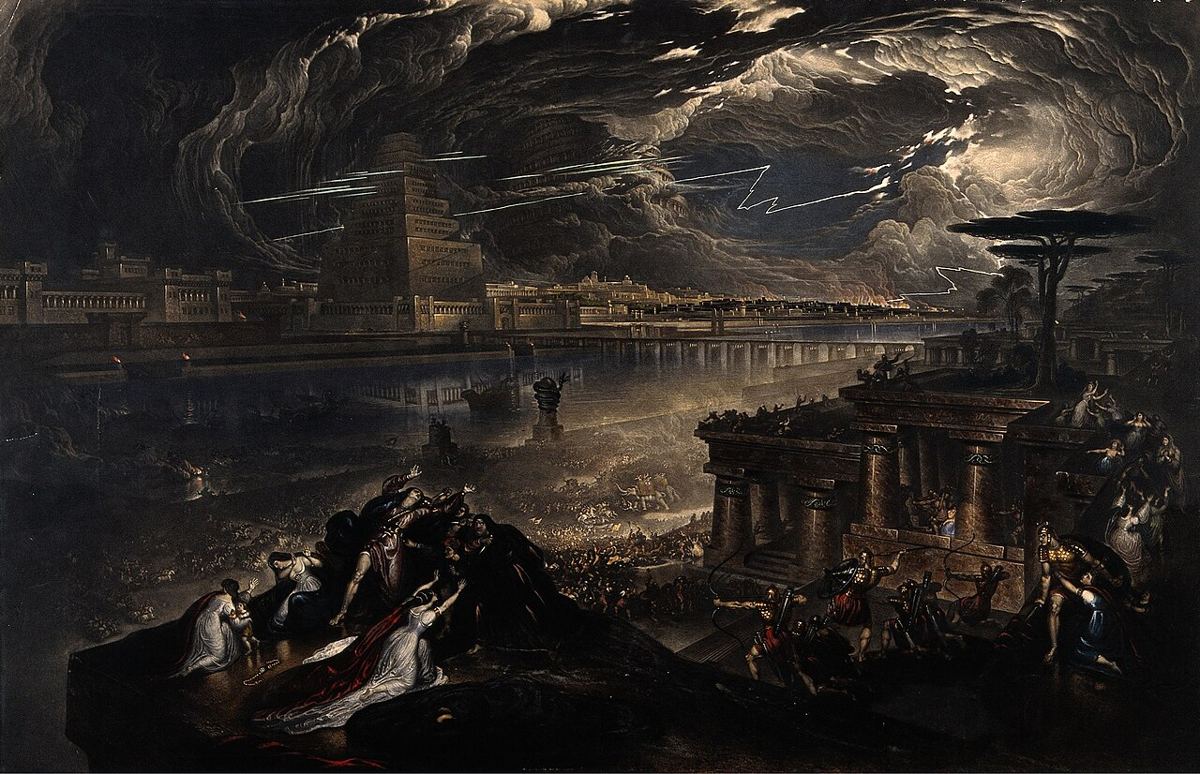
The announcement. The prophet Isaiah, around 700 BC according to tradition, then the prophet Jeremiah, around 594 BC, announce that Babylon, the greatest city of its time, will be overthrown and become a wasteland where no one will live anymore.
What happened. Babylon falls to Cyrus in 539 BC without being destroyed, then gradually empties. Around AD 20, the writer Strabo describes it as “a great desert”. The reconstruction launched by Saddam Hussein from 1983 brought no inhabitants back.
What is still debated. the text announced a violent overthrow, whereas the city emptied slowly, for ordinary reasons such as shifting trade routes and population.
Why it is striking
Damascus, Rome and Athens are still inhabited. The great Isaiah scroll found at Qumran, copied by around 100 BC at the latest, already says “it will never be inhabited”, while the city was still alive. The violent fall that was announced, however, does not match.
Main objection (in French for now)
Babylone n’a pas été détruite en 539 : Cyrus y est entré sans combat et la ville est restée active plus de cinq siècles (Alexandre y meurt en 323). Le scénario d’Es 13:19 et de Jr 51:58 — un renversement violent — ne correspond pas à l’histoire.
The text (World English Bible)
Behold, I will stir up the Medes against them, who will not value silver, and as for gold, they will not delight in it. Their bows will dash the young men in pieces; and they shall have no pity on the fruit of the womb. Their eyes will not spare children. Babylon, the glory of kingdoms, the beauty of the Chaldeans’ pride, will be like when God overthrew Sodom and Gomorrah. It will never be inhabited, neither will it be lived in from generation to generation. The Arabian will not pitch a tent there, neither will shepherds make their flocks lie down there. But wild animals of the desert will lie there, and their houses will be full of jackals. Ostriches will dwell there, and wild goats will…
Isa 13:17-22
Sources
- Strabon, Géographie 16.1.5 (trad. H. L. Jones, Loeb) — LacusCurtius (Bill Thayer, University of Chicago)
- Pline l’Ancien, Histoire naturelle 6.30 (trad. Bostock & Riley) — Perseus Digital Library, Tufts University
- Pausanias, Description de la Grèce 8.33.2-3 (trad. W. H. S. Jones) — Theoi Classical Texts Library
- Babylon — Décision 43 COM 8B.13 (inscription au patrimoine mondial) — UNESCO World Heritage Centre
- Babylon — dossier de proposition d’inscription — UNESCO World Heritage Centre / République d’Irak
- US base has caused « shocking damage » to Babylon — The Art Newspaper
- Babylon — World History Encyclopedia (Joshua J. Mark)
- ABC 7 (Chronique de Nabonide) — Livius.org, d’après A. K. Grayson, Assyrian and Babylonian Chronicles